
Social Responsibility in Remembrance: PPSF Gathers at the Museum of the Second World War in Gdańsk

On 23 and 24 April, participants of our Preserving the Past, Securing the Future (PPSF) project met in Gdańsk, Poland, for the programme’s second capacity building workshop, ‘Social Responsibility & Community Engagement in Remembrance Tourism’, hosted at the Museum of the Second World War.

Following on from the momentum of the first workshop in Normandy, this two-day gathering brought together heritage professionals from across Europe to explore how memorial sites can deepen their engagement with communities, and how the principles of social sustainability can be woven into everyday remembrance practice.

The workshop opened on Thursday morning with a warm welcome from the hosting museum, and an introduction to the workshop by LREF and the trainers from Mascontour, project partner and sustainability experts. One of the first highlights of the morning was a dedicated session in which participants shared how they had applied the learnings from Workshop 1 on Environmental Sustainability in Remembrance Practice to their own organisations and discussed any challenges this had brought. Since February, each participant has committed to implementing three short-term, actionable environmental sustainability goals. This session gave everyone the opportunity to reflect on their progress, celebrate successes, and acknowledge the challenges encountered along the way, sharing advice and suggestions amongst the group. To recognise the outstanding efforts made in just a matter of months, the group selected and awarded the top three initiatives from across the cohort — a moment that underscored both the ambition and the practical commitment driving this group.

The core thematic session of the first day focused on People, Memory & Social Responsibility. Led by Mascontour, the session introduced participants to good practices of social responsibility within the cultural heritage and WWII memory sector. Through interactive exercises and open discussion, participants explored how memorial sites can act as anchors of community life, not only preserving the past but actively contributing to the social fabric of the present. The conversation included staff and volunteer engagement, inclusive access, and the responsibilities that heritage organisations carry as stewards of difficult and deeply personal histories.

After lunch, the group enjoyed a presentation by Mateusz Jasik, Deputy Director and Magdalena Jaszcza, Chief Specialist in Programs and Cooperation Department at the Museum of the Second World War in Gdańsk  about the site’s history, mission and approach, including many great community initiatives, before embarking on a guided study tour of the museum itself, with a learning exercise along the way.

Opened in 2017, the Museum of the Second World War is one of Europe’s most significant and ambitious WWII memorial institutions. Its expansive permanent exhibition takes visitors on a journey through the causes, course and consequences of the war, placing the Polish experience within a broader global context. For PPSF participants, the visit was not just a cultural excursion but also an opportunity to observe, question and discuss how a major institution like this navigates its responsibilities to different communities: local residents and visitors, international visitors, survivors, educators, and future generations alike.

After an evening to reflect on everything learned and visited during the study tour, Friday’s programme brought the participants back together to consider their responses to the learning exercise. Along the study tour, each participant had been given a persona, from someone with limited physical mobility, to a deaf/blind visitor, to a neurodivergent person or young family. Participants had to consider the visitor experience of this persona as they discovered the museum. Friday’s session was about reviewing this – what was good practice, what could be improved and how. Through this practical exercise and guided reflection, participants developed concrete ideas for strengthening the accessibility of our museums and heritage sites to provide a positive experience for all communities.

To conclude a productive, busy few days, participants explore the dockard of Gdańsk, an area under development, with a guided tour led by Mateusz Jasik, to discuss the neighbourhoods important history and it’s planned future. A memorable end to the visit!

“The Gdańsk workshop marks another important milestone in the PPSF Training Programme, and the energy and commitment shown by participants continues to grow,” says Emme Johnson, Project Manager at the LRE Foundation. “The programme’s combination of e-learning, expert-led workshops, peer learning and mentoring is giving heritage professionals the tools and confidence they need to drive meaningful, lasting change within their organisations,” she adds.

The next workshop will take place on 11–12 June 2026 in Lucca, Italy, hosted by project partner Fondazione Campus and will focus on Economic Sustainability & Strategic Management of Remembrance Tourism Sites. It will continue to build on the foundations laid in Normandy and Gdańsk, as participants carry their growing expertise and networks forward on the journey toward a more sustainable future for WWII cultural heritage across Europe.

PPSF is a Creative Europe programme co-funded by the European Commission.

We’ve launched the Canadian Trail East Friesland on the Liberation Route Europe, 81 years after liberation 

On Tuesday, April 14, marking the 81st anniversary of Friesland’s liberation in April 1945, we officially opened the Canadian Trail East Friesland, the new and final section of the Liberation Route Europe Canadian Trail in the region. The route follows the path of the Canadian liberators, all the way to the Wadden Sea. 

The inauguration was marked by a powerful symbolic moment: mayors and aldermen from the municipalities of Smallingerland, Opsterland, Ooststellingwerf, Achtkarspelen and Tytsjerksteradiel activated an air-raid siren, echoing the sound that once filled the air during the Second World War.

Along the 75-kilometre route, visitors will encounter 21 war memorials and points of interest, each marked by a Floor Vector of Memory. At every marker, a QR code connects visitors to the specific history of that location, drawing not only on the story of Canadian forces, but on the full breadth of events that unfolded on these very sites during the war. The stories themselves were carefully gathered by volunteers from local historical societies, weaving together the landscape and the memory it holds. 

The project was led by the Smelne’s Erfskip Drachten Foundation in collaboration with the LRE Foundation and the five municipalities, bringing together local knowledge and regional commitment to remembrance. 

In the footsteps of the Canadian liberators 

The Canadian Trail East Friesland follows the advance of Canadian troops as they moved toward the Wadden Sea in April 1945. Their mission was to cut off German forces in Friesland from those in Groningen, gradually isolating them and forcing their surrender. 

Along the way, the route passes through places where key moments unfolded – from the forests south of Oosterwolde, where fighting began in early April, to the canal crossings near Burgum, Kootstertille and Augustinusga. The lock complex near Kollumerpomp marks one of the final locations of intense fighting between April 13 and 16. 

Today, the landscape tells a layered story. Numerous memorials along the route commemorate the many lives lost in the final days before liberation, including civilians, Allied airmen, and victims of persecution and forced labour. 

The Canadian Trail East Fryslân is now available on the Liberation Route Europe app and website, where visitors can explore the route, read all the stories, and plan their own journey through this meaningful landscape. 

New LRE Trail in Jersey Sheds Light on Forced Labour Under Nazi Occupation 

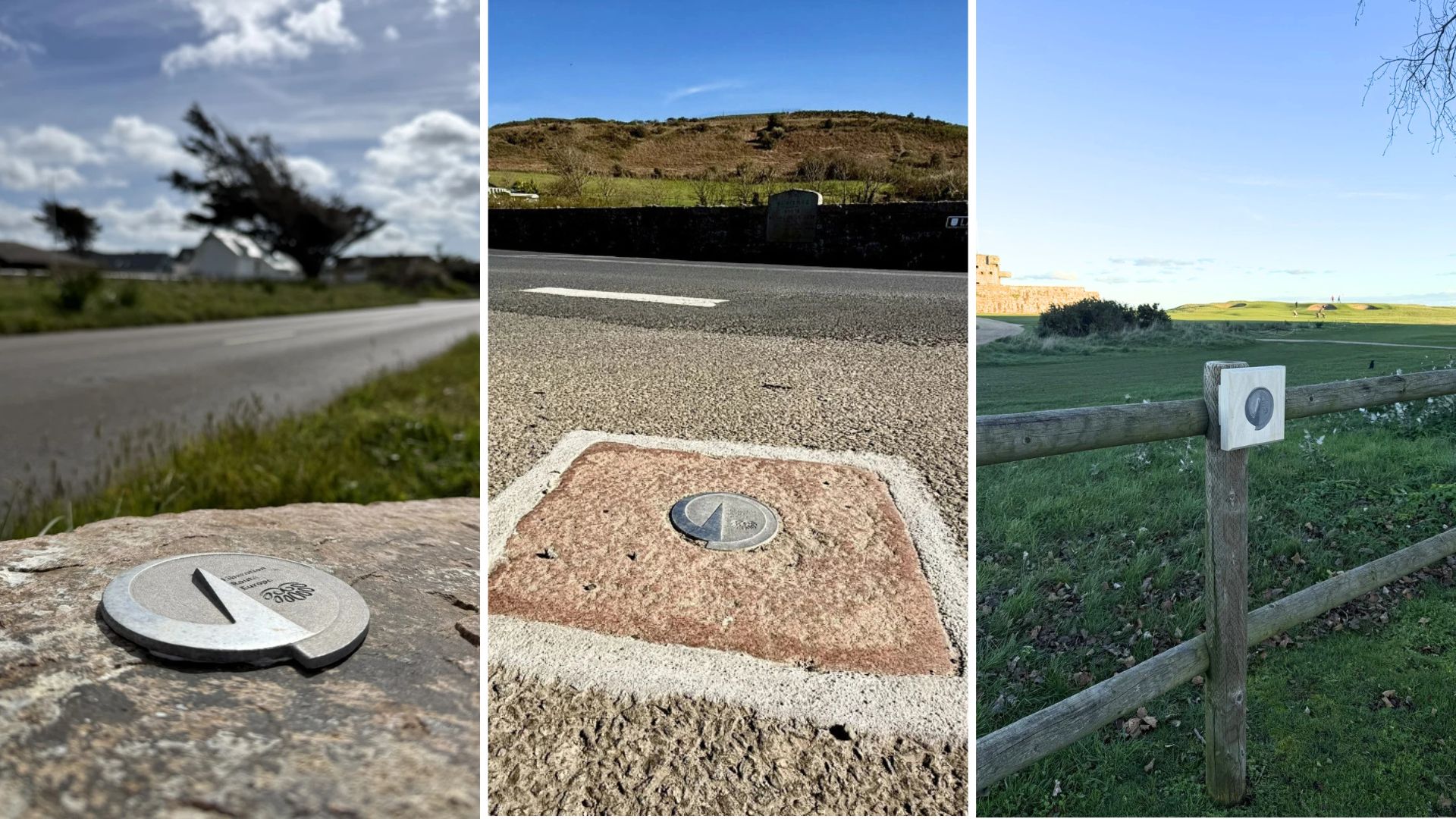
In partnership with Jersey Heritage, we have just launched the new “Forced Labour Camps in Jersey” themed route on the Channel Island of Jersey. This latest addition to the Liberation Route Europe invites visitors and residents alike to explore a lesser-known chapter of the Second World War: the history of forced and slave labour under Nazi occupation. 

Tracing the history of forced labour on Jersey 

Between the autumn of 1941 and 1944, approximately 6,000 foreign workers were brought to Jersey against their will by the Organisation Todt, responsible for major civil and military construction projects across occupied Europe. These men, and some women, were forced to work under harsh, and even dangerous, brutal conditions on the island. 

They were housed in 13 forced labour camps, often located close to construction sites. Today, these locations are the focus of the new route, marked by the first Liberation Route Europe Vectors of Memory ever installed in the Channel Islands. The trail connects each site, offering visitors insights into the stories of the workers. 

The labourers were assigned physically demanding and dangerous tasks, including building concrete fortifications, excavating tunnel systems, transporting sand and stone, and unloading materials from barges. They came from across Europe and beyond, including Algeria, Belgium, Czechoslovakia, France, Italy, Morocco, the Netherlands, Poland, Russia, Senegal, Spain, Tunisia and Ukraine. Their experiences varied significantly: workers from Western Europe and North Africa were generally conscripted or forced labourers, receiving limited payment in Occupation Reichsmarks and restricted movement outside working hours under curfew, while Soviet workers from Ukraine, Belarus and Russia were treated as slave labourers, with no pay, minimal rations, no freedom of movement, and systematic violence and abuse. The precise status of Polish workers remains, for now, unclear. 

Integrating these sites into the commemorative landscape 

This new route embeds these histories, and the experiences of those involved, into the European WWII commemorative landscape, ensuring they are not forgotten. 

“The launch of this route is a significant step in acknowledging a painful part of Jersey’s wartime history,” said Emme Johnson, Project Manager at the LRE Foundation. “By marking these sites and sharing the stories of those who suffered here, we hope to foster reflection, awareness and a deeper understanding of the human impact of occupation and forced labour. The installation of Vectors of Memory at these sites is also another step to ensure they remain physicallly represented in Jersey’s landscape” 

Plan your visit 

This new trail marks the fifth Liberation Route Europe route on Jersey, further strengthening the island’s role within the wider European memory landscape. 

The route is fully accessible via the Liberation Route Europe website and mobile app, where visitors can explore all locations, read the stories connected to each site, and plan their journey in advance. For those wishing to experience the trail on the ground, GPX files are also available, making it easy to navigate between the former camp sites at their own pace. 

The international exhibition Art of Remembrance arrives in Turin, Italy 

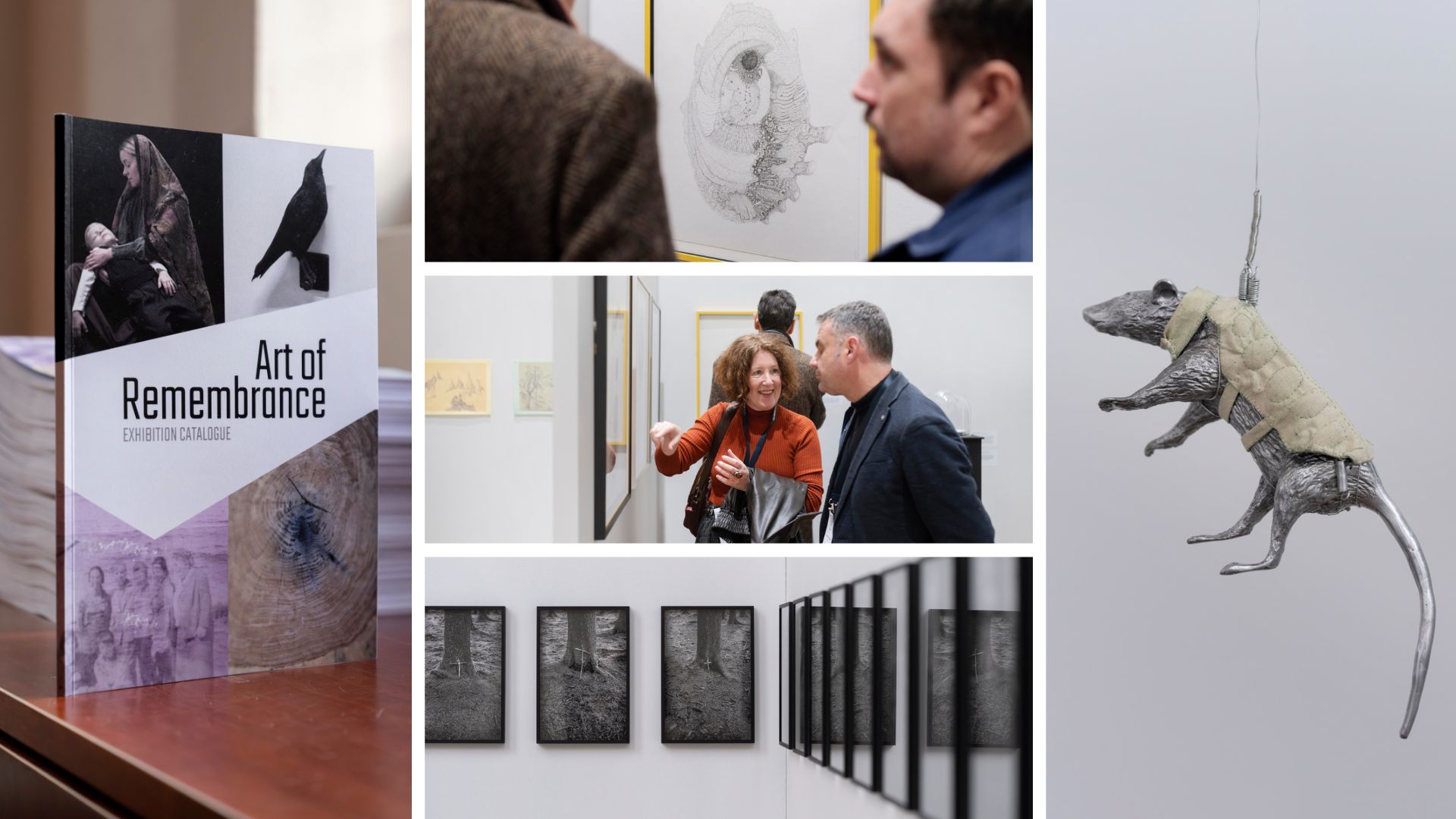
After opening on 9 March at the House of Nijmegen History in Nijmegen (The Netherlands), the international exhibition Art of Remembrance continues its journey in Turin (Italy), where it will open to the public on Saturday, 18 April at the Polo del ’900. 

The exhibition is part of a wider European cooperation project co-funded by the European Union’s Creative Europe programme, in which the LRE Foundation is a key partner among others. It brings together contemporary artistic practices developed through residencies at World War II remembrance sites across Europe. 
Free to visit, the exhibition will remain open until 7 May. 

On display are works by Rebekka Bauer, Raphaël Dallaporta, Juhana Moisander and Gail Ritchie. Each artist developed their project during a residency hosted by a different European site of memory: the former partisan stronghold of Paraloup in Italy, the Bastogne War Museum, the Sybir Memorial Museum and La Coupole WWII Museum.

In Art of Remembrance, memory is approached as something unstable and continuously reshaped rather than fixed in time. The works highlight perspectives that often remain at the margins, from women’s roles in resistance and survival and intergenerational remembrance, as well as the presence of non-human witnesses such as animals and landscapes. Attention is also given to how trauma is gradually absorbed by bodies and environments, lingering beyond the historical moment. 

These reflections take form through a wide range of artistic media, including glass installations, sculptural and organic materials, photography, film, and immersive sound. Each work is rooted in an in-depth process of research and exchange, developed through the artists’ engagement with archives, historians, and local communities during their residencies, allowing the specific context of each site to shape both method and outcome. 

Rather than presenting direct representations of wartime events, the exhibition unfolds through suggestion, metaphor, and material presence, encouraging a slow, attentive and emotional encounter with the past. 

While the exhibition in Nijmegen engaged with a city deeply shaped by wartime devastation and reconstruction, the Turin chapter situates the exhibition within a major cultural hub dedicated to the history and legacies of the twentieth century, creating a new dialogue between European memory and local context. 

The exhibition will be inaugurated on Saturday, 18 April at 18:00 in the Salotto del Polo. Speakers will include the exhibition’s curator Isabelle Benoit; artist Rebekka Bauer, who undertook her residency in Paraloup; historian Mirco Carrattieri, coordinator of the LRE Italy Historical Advisory Board; Alessandro Rubini, director of the Polo del ’900; Beatrice Verri, of the Nuto Revelli Foundation; and Paola Boccalatte of the Paesaggi della Memoria Scientific Committee. 

Also present will be Aldo Rolfi, son of Lidia Beccaria Rolfi, a member of the Italian Resistance who was later deported to Ravensbrück and became an important voice in Holocaust testimony. Rolfi’s life and legacy are at the centre of Rebekka Bauer’s installation. 

Alongside the exhibition, a public programme of workshops, guided tours and educational activities will run throughout its opening period, offering visitors opportunities to engage more deeply with the artistic processes and the broader questions around how memory is shaped and transmitted today. 

The project is co-funded by the European Union under the Creative Europe programme. Partners include Tempora, the LRE Foundation, La Coupole Centre d’Histoire, Fondazione Nuto Revelli, the City of Bastogne and the Sybir Memorial Museum, in collaboration with the Polo del ’900 Foundation. 

New Cycling Route “War in the Over-Betuwe” Launched on Liberation Route Europe 

On 2 April, a new themed cycling route, War in the Over-Betuwe, was officially launched in the municipalities of Over-Betuwe and Lingewaard, in the region between Nijmegen and Arnhem. Developed as part of the LRE Foundation network, the route sheds light on the profound impact of the Second World War on this river landscape and its communities. 

The launch date carries strong historical significance: April 1945 marked the end of German occupation in the Over-Betuwe region. Choosing this moment for the inauguration creates a direct link between past and present, inviting visitors to reflect on liberation while experiencing the landscape where these events unfolded. 

The 60-kilometre cycling loop, located in the Lingewaard Municipality – an active member of the LREF network – connects 26 points of interest across the Betuwe region, an area defined by its floodplains and dykes between the Rhine and Waal rivers. The route is now marked by Floor Vectors, guiding visitors through locations that reveal personal and collective wartime experiences. 

From the Schoonderlogt Estate in Elst to Fort Pannerden in Doornenburg, passing through Huissen and Driel, the route tells stories of evacuation, deliberate flooding, and devastating bombings. These narratives highlight the civilian perspective of war, bringing attention to the resilience and suffering of local communities. 

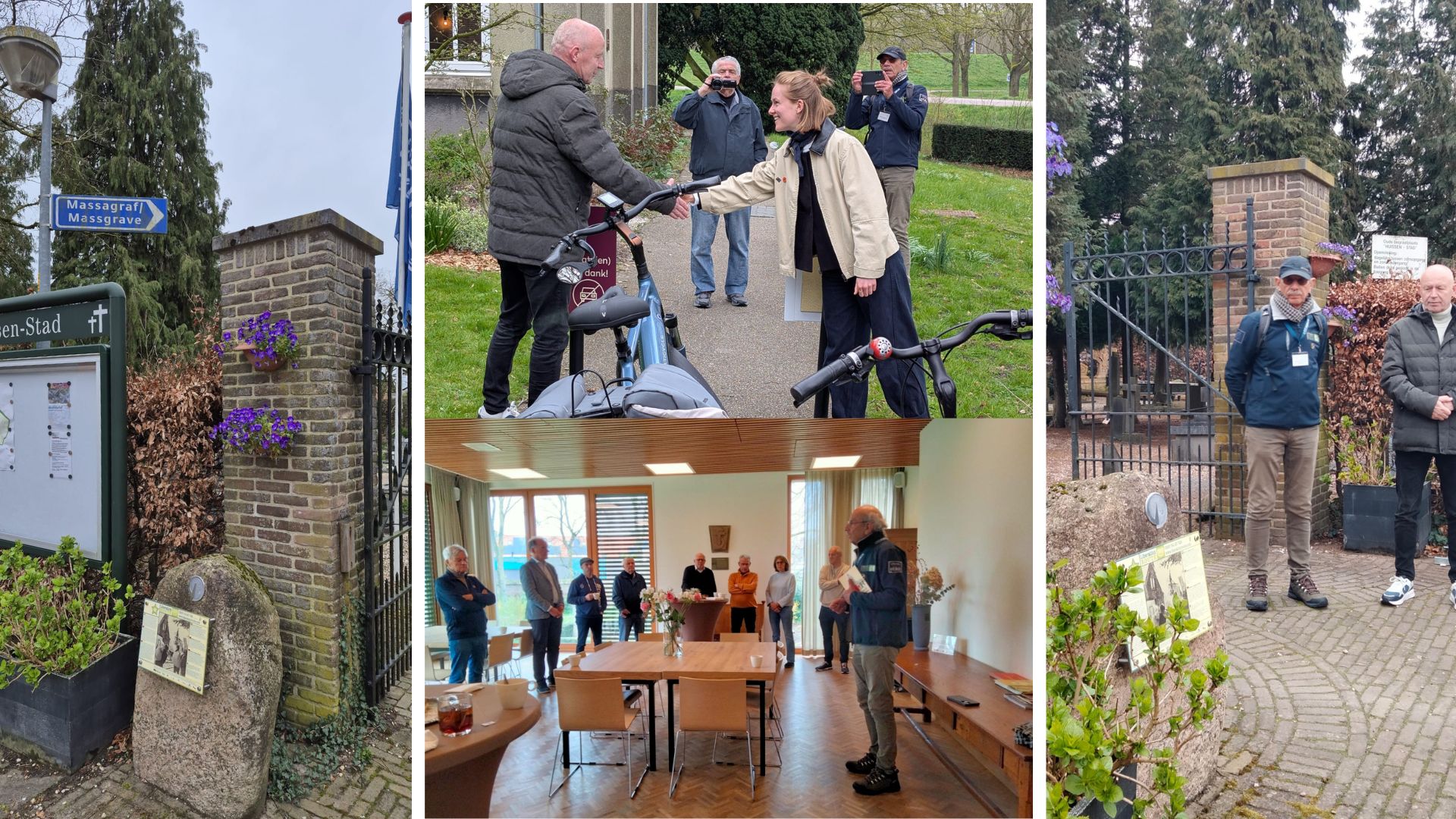
The inauguration was organised by the ExodusComité, a key partner in the route’s development. The event itself echoed the spirit of the route: councillors Aart Slob and Wijnte Hol each set off by bicycle from Bemmel and Elst respectively, passing landmarks from their own municipalities, and following the signposted route to Huissen. 

At 11:30, participants gathered at a Liberation Route Europe audio spot near the mass grave in Huissen. This site (42. Engulfed in fire and smoke) commemorates the tragic experiences of the town’s citizens during the war. 

The group then continued to the former monastery on Kloosterlaan in Huissen – once used as a refugee centre – where the route was symbolically opened. The gathering concluded with coffee and traditional monastery cake, alongside speeches by local representatives, former chairman Martien van Hemmen, and Aude Maillard from the LRE Foundation, who was present at the launch together with members of the current board. 

Adding a tangible connection to the past, the “Niemandsland” museum – also featured as a stop along the route – was present with two historic jeeps. 

War in the Over-Betuwe offers visitors not only a scenic cycling experience but also a powerful journey through memory. By combining storytelling, landscape, and physical movement, the route encourages reflection on how war reshaped both the land and the lives of those who inhabited it. Visitors can plan their trip along the route via the Liberation Route Europe website, where all related stories and points of interest are also available to explore in advance or along the way. 

As part of the broader Liberation Route Europe network, this new addition continues the LRE Foundation’s mission to connect people with the history of the Second World War through meaningful, on-site experiences across Europe.