
LRE Foundation Welcomes Dietmar Nietan as New Chairman of the International Supervisory Board 

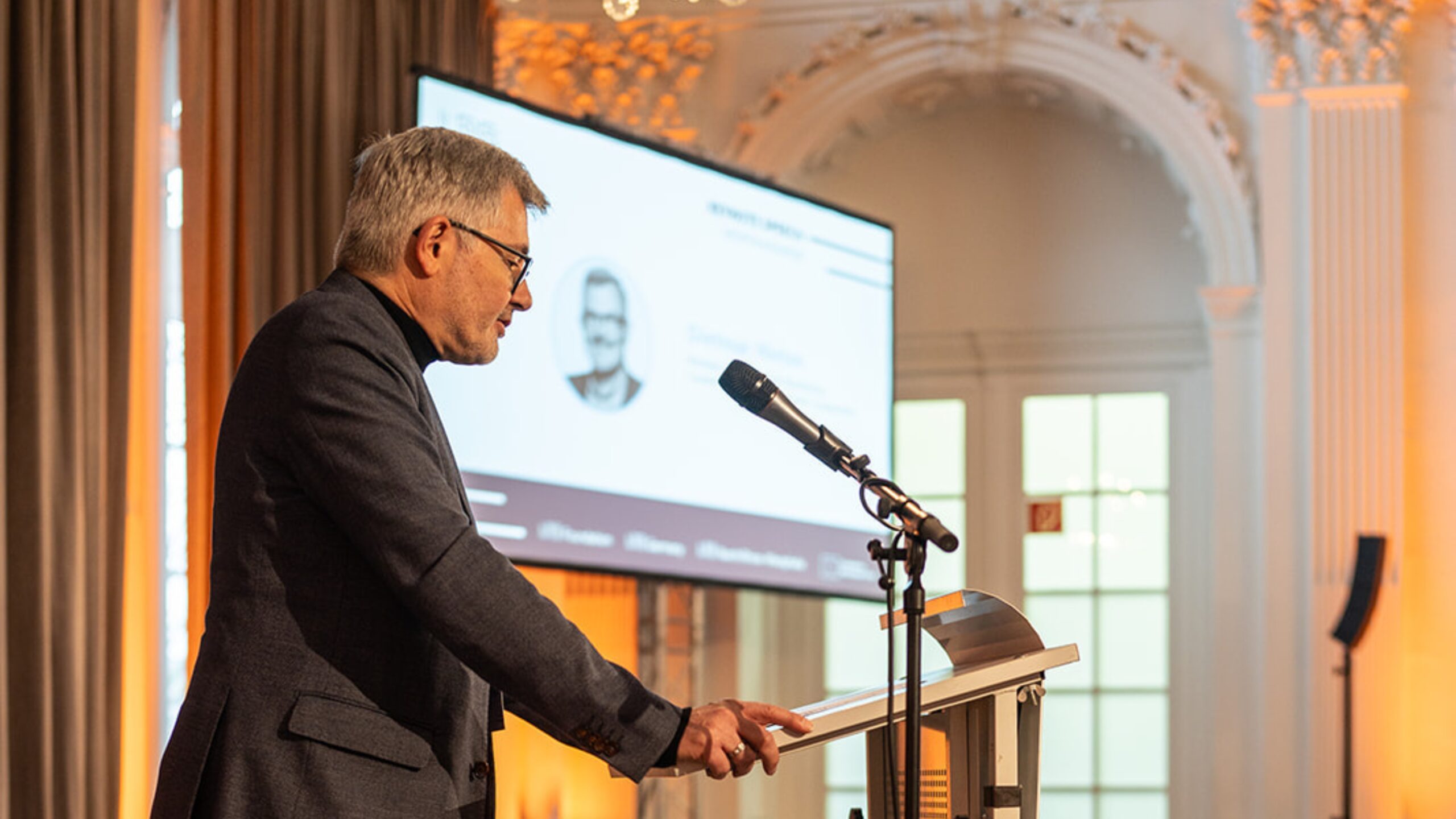
The LRE Foundation is pleased to announce the appointment of Dietmar Nietan as the new Chairman of its International Supervisory Board. Mr. Nietan succeeds Ed Kronenburg, who is stepping down after years of valued guidance and service.

Mr. Nietan is a former member of the German Parliament and has devoted much of his career to strengthening German-Polish relations. For many years he served as Coordinator of German-Polish Intersocietal and Cross-Border Cooperation on behalf of the German Foreign Office, helping to foster close ties and collaborative projects between the two countries. He also spent 12 years as Chair of the Federal Association of the German-Polish Society, further demonstrating his longstanding commitment to cross-border dialogue and understanding.

Today, Mr. Nietan continues this work as a trustee of the Foundation “Remembrance, Responsibility and Future – EVZ” in Germany and of the Foundation for the International Youth Meeting Centre in Oświęcim/Auschwitz in Poland. A dedicated member of the LRE Foundation’s Supervisory Board for several years, he brings deep expertise and an enduring passion for preserving the memory and lessons of the Second World War.

On his appointment, Mr. Nietan said: “I have been involved with the LRE Foundation for a long time. I am happy to take on the chairmanship of the Advisory Board in order to play an even more intensive role in strengthening the impact of the LRE Foundation in European remembrance policy. Through its activities, our LRE Foundation offers a unique opportunity to bring people together around the theme of remembrance.”

He continued: “Because one thing is very clear to me: especially today, in the face of rising right-wing populism throughout Europe, it is more important than ever to bring people together so that they can learn from history, and do so from multiple perspectives.”

The International Supervisory Board oversees the management, activities, and finances of the LRE Foundation, ensuring that its projects continue to grow. With Mr. Nietan now at the forefront, the Board looks forward to building on the strong foundations laid under Mr. Kronenburg’s chairmanship.

As we welcome our new chairman, we also reaffirm our commitment to the Foundation’s mission. His leadership reflects the spirit of remembrance and cooperation that defines the LRE Foundation. We offer our deepest gratitude to Ed Kronenburg for his dedication and vision, and we look ahead to a new chapter focused on keeping memory alive for future generations, fostering transnational dialogue and peace.

Applications Open: Join the PPSF Training Programme on Sustainable WWII Heritage 

The Preserving the Past, Securing the Future (PPSF) project is now accepting applications for its international training programme on sustainability for WWII remembrance and cultural heritage institutions. This programme is aimed at professionals working within cultural heritage and remembrance tourism organisations, such as heritage sites, interpretation centres and museums. This is a unique opportunity to gain practical tools, connect with peers across Europe, and lead your organisation toward a more resilient and responsible future.  

The PPSF Training Programme will equip participants with the knowledge, tools, and network to embed environmental, social, and economic sustainability into your mission and operations. Through a curated combination of e‑learning modules, in‑person workshops, study visits, and peer-to-peer learning and mentoring, you will gain practical strategies and inspiration to lead meaningful change. 

  1. E‑Learning Modules (prerequisite to participate in the in-person trainings) 
    These three modules will cover: 
  • Environmental responsibility and climate action at heritage sites 
  • Social inclusion, community engagement, and accessibility 
  • Economic resilience, governance, and sustainable business models 

These self-paced courses create a shared baseline of understanding and readiness to efficiently participate in the in-person trainings. 

  1. In-Person Workshops and Study Visits  
    Participants will gather for three in‑person trainings across Europe: 
  • 16–17 February 2026, Caen, France with a focus on environmental sustainability and astudy visit to Juno Beach Centre
  • 11–12 June 2026, Lucca, Italy with a focus on economic sustainability and institutional planning. 

Why participate? 

  • Ensure Long-Term Relevance and Integrity by strengthening your resilience through sustainability. 
  • Engage Visitors Through Sustainability and increase visitor satisfaction and loyalty. 
  • Strengthen Staff Skills by equipping your team with practical sustainability knowledge and tools. 
  • Make Your Efforts Visible and Impactful to ensure your initiatives are seen, appreciated, and credible. 
  • Boost Access to EU/national Funding, Grants and Partnerships by demonstrating your commitment to sustainability. 

How to Apply 

Applications are now open! For more information and to sign up see here.

Do not miss this opportunity to shape the future of your institution. Apply today and be a part of the sustainable change in the WWII remembrance and cultural heritage sector. 

The LRE Forum returns in 2026, celebrating its 10th edition in Arnhem and Nijmegen 

The LRE Foundation is delighted to announce that the LRE Forum 2026 will take place from 9 to 12 March across two historic cities — Arnhem and Nijmegen — in the Province of Gelderland. This 10th edition will give participants the chance to experience both cities, each deeply connected to Europe’s liberation history and to the ongoing work of remembrance and education.

The event is made possible thanks to the close collaboration with the municipalities of Arnhem and Nijmegen and the Province of Gelderland, who have confirmed their commitment and enthusiasm to welcome the event to their locations. This partnership reflects our shared mission to promote remembrance, education, and the preservation of Europe’s WWII heritage. 

A Diverse and Inspiring Programme 

The LRE Forum 2026 will offer a rich and engaging programme designed to foster dialogue, connection, and reflection within the fields of WWII heritage, remembrance tourism, and history education

The Forum in Nijmegen will open with a City Walk, offering participants the opportunity to discover the history and heritage of the Netherlands’ oldest city. Nijmegen will also host the Welcome Cocktail for members of the LREF network and, for the first time, the Youth Forum — a two-day programme inviting young participants to reflect on WWII history, remembrance, and how lessons from the past can guide us in addressing today’s global challenges. 

In Arnhem, participants will take part in the LRE Members Seminar, the Conference, the Gala Dinner, and the EXPO – key events that will bring together professionals, partners, and remembrance organisations from across Europe. These gatherings will provide a platform for sharing ideas, building partnerships, and discussing the future of remembrance and heritage tourism. 

A Milestone Edition in the Heart of Gelderland 

This 10th edition holds particular significance. Not only does it celebrate a decade of the LRE Forum, but it also brings the event for the first time to the Gelderland region, the birthplace of the Liberation Route Europe — the flagship project that laid the foundation for what is today the LRE Foundation. 

Since its creation, the LRE Foundation has evolved into an international remembrance organisation, active in historical research, educational initiatives, and cross-border projects promoting the preservation and interpretation of Europe’s 20th-century history. Hosting the Forum in Arnhem and Nijmegen represents both a return to our roots and an opportunity to highlight the region’s central role in the stories of liberation and post-war reconstruction. 

Save the date 

We invite all members, partners, and stakeholders to mark their calendars for 9–12 March 2026 and start planning their journey to Gelderland, easily accessible by train or via Amsterdam and Eindhoven airports

Registration will open in November, and we will also share a list of affiliated hotels in Arnhem offering special rates for Forum participants. 

We look forward to welcoming you to Arnhem and Nijmegen in March 2026 for a memorable and inspiring 10th edition of the LRE Forum

A new set of hiking trails have been launched along the Liberation Route: Discover the Canadian Trails in Overijssel

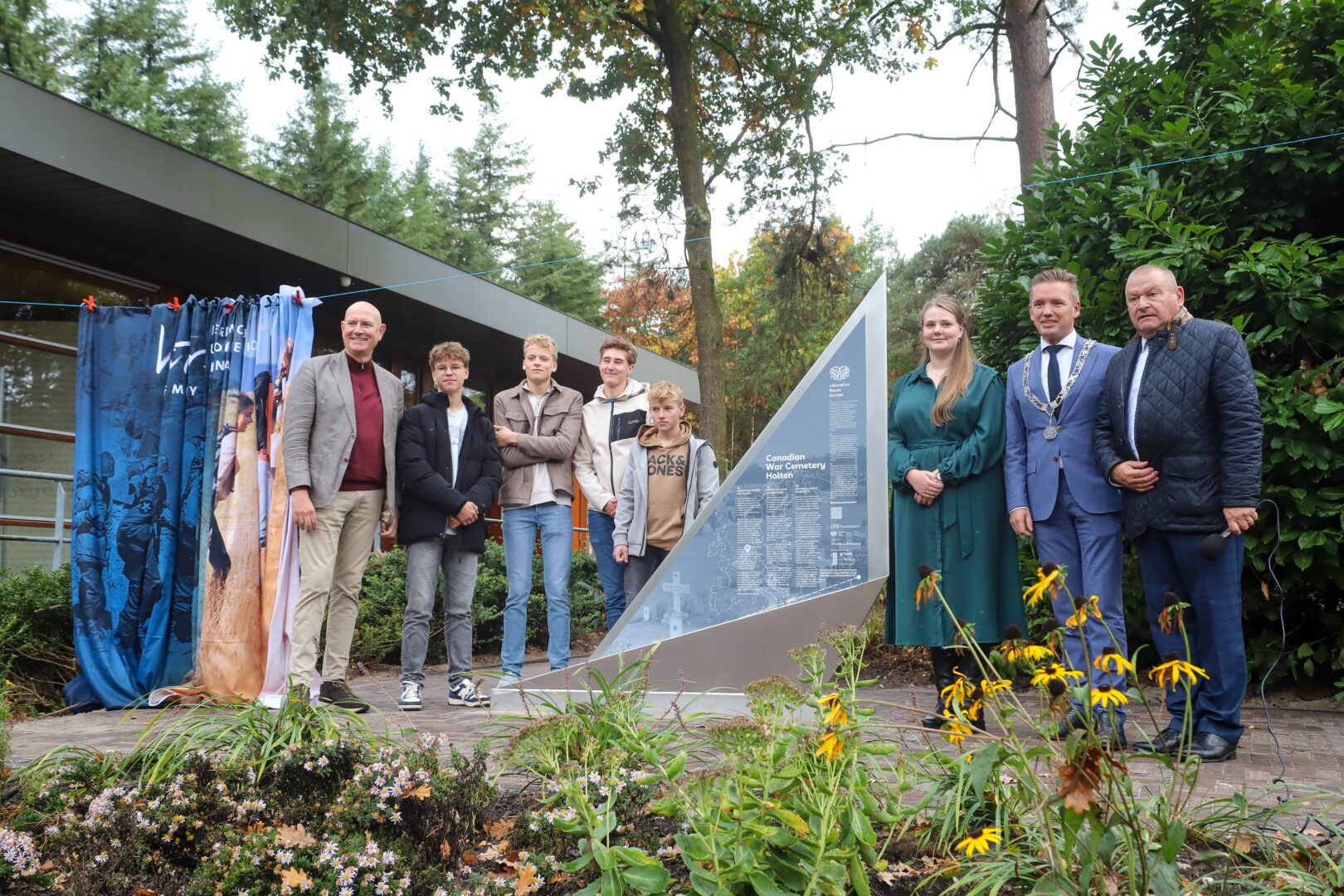
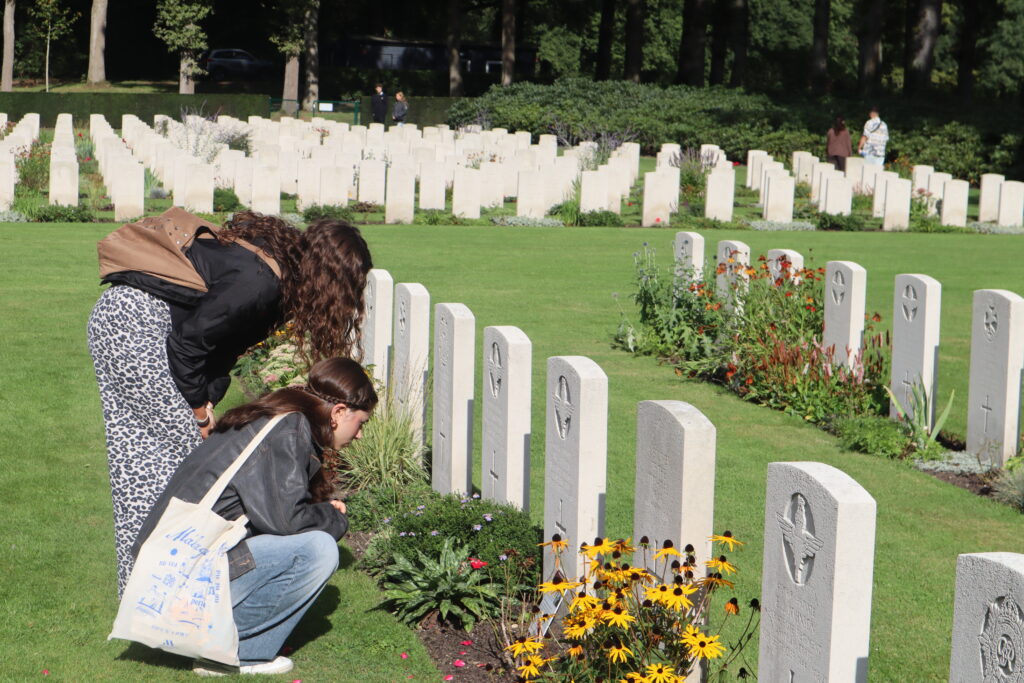
A new hiking trail commemorating the contribution of the Canadians in the liberation of the Overijssel’s region from Nazi occupation was officially launched this week in Holten, as part of the Liberation Route Europe. 80 years after the end of occupation in the Dutch province, a commemorative event was organised at the Canadian War Cemetery in Holten featuring a memorial ceremony, the unveiling of a new ‘Vector of Memory’, and the introduction of the Canadian Trail Overijssel, the latter two part of the Liberation Route.

Launch event in Holten

The event featured speeches by Provincial Executive Erwin Hoogland, Mayor Jurgen van Houdt of Rijssen-Holten, and Jurriaan de Mol, Honorary Chairman of the LRE Foundation. All speakers emphasised the importance of continuing to commemorate and celebrate our freedom in a meaningful and relevant way involving the younger generations and making them aware of the importance of the freedom and democratic values found after the end of the Second World War. Therefore, we are glad that the Jacobus Fruytier School community in Rijssen has been involved in the project and embraced its remembrance mission by adopting the newly unveiled ‘Vector of Memory’ near the Canadian War Cemetery in Holten.

400 kilometers: 3 long-distance trails, 100+ stories, and 5 circular walks

The new Canadian trail in Overijssel has an international scope since it is part of a broader system of trails that follows the journey of Canadian troops from the beaches of Normandy through France, Belgium, and the Netherlands, highlighting relevant remembrance and historical sites and personal stories from the final phase of World War II. The new trail traces their path through the province – along the IJssel River, across the Sallandse Heuvelrug, and through the eastern regions of Overijssel – stretching from Deventer to Staphorst, Holten to Balkbrug, and Hengevelde to Gramsbergen.  It spans 400 kilometers, divided into three long-distance routes and five circular walks suitable for day trips or shorter hikes. These include paths in Deventer, Zwolle, Diepenheim, Almelo and Nijverdal. Along the way, over 100 stories and remembrance sites tell the province’s liberation, resistance efforts, and civilian experiences.

A regional collaboration

The ‘Canadian Trail’ Overijssel with its ‘Vectors of Memory’ is an initiative of the LRE Foundation, developed in collaboration with historical societies, engaged citizens, Overijssel’s route bureaus, and public historian Gerjan Brinksma. The project is made possible thanks to the support of the Province of Overijssel, Collectie Overijssel, the Overijssel Cultural Fund, Stichting Bercoop Fonds, Stichting voor Elkaar (Univé), the Roelvink Fund, and the municipalities of Deventer, Zwolle, Staphorst, Rijssen-Holten, Hellendoorn, Ommen, Hof van Twente, Almelo, Wierden, Twenterand, and Hardenberg.

The route is available online on the Liberation Route Europe’s website, featuring interactive maps, a route planner, and QR-coded ‘Vectors of Memory’ that mark key locations. These markers link directly to historical narratives, allowing walkers to reflect on the past while exploring the region’s natural beauty.

Art of Remembrance Artist Workshop: a Creative Journey in Progress

Between 7 and 8 October, the Art of Remembrance artists came together in Brussels for a mid-point workshop part of the EU-funded project led by Tempora and developed together with a consortium of six partners including the LRE Foundation. The workshop brought together the project’s artists, who exchanged first impressions on their host sites and residencies, shared the progress of their artistic explorations, and began shaping ideas for the upcoming traveling exhibition. 

All four artists have by now spent the first residency period at their respective host sites and were able to report on their experiences there. Gail Ritchie from Northern Ireland was chosen for the History Centre La Coupole near Saint-Omer in France. Finnish visual artist Juhana Moisander realises his creative project at the Sybir Memorial Museum in Białystok, Poland. Rebekka Bauer, a German artist experienced in installations is working with the Nuto Revelli Foundation in Paraloup, a hamlet serving as a refuge for WWII resistance fighters in Piedmont, Italy. French photographer Raphaël Dallaporta is in residence at the Bastogne War Museum in Belgium

During the workshop, the artists reflected on their journeys so far and highlighted their experiences engaging with local communities, attending events, and meeting students. Each artist presented the early stages of their work, offering glimpses into the diverse approaches and themes emerging from the residencies. The day continued with collaborative discussions led by Tempora’s Isabelle Benoît, the project’s curator, focusing on the conceptual direction of the future exhibition. 

On October 8, after a productive day of presentations and exhibition planning, the group visited the House of European History. There, Professor Pieter Lagrou from Université Libre de Bruxelles (ULB) sparked a thought-provoking exchange on public history and the importance of developing new narratives to make history more accessible and engaging for diverse audiences. The visit continued with a guided tour of the museum’s temporary exhibition, ‘Presence of the Past – A European Album,’ led by curator Simina Bădică. The artists had the chance to draw inspiration for the traveling exhibition from this display of pictures that takes a fresh and bold perspective on collective memory and its cultural expressions. 

Keep an eye on the Art of Remembrance website for more updates as this creative journey unfolds.  

A glimpse into the Liberation Route Europe Youth Program in September 

During September, other three successful youth exchanges were carried out in the framework of the Active Remembrance Youth Program, involving young history enthusiasts from all over Europe. Participants had the chance to connect with stories, places and monuments of the Second World War in countries ranging from the Netherlands, Belgium and France to Italy. Here are some highlights of the trips. 

The Operation Market Garden exchange

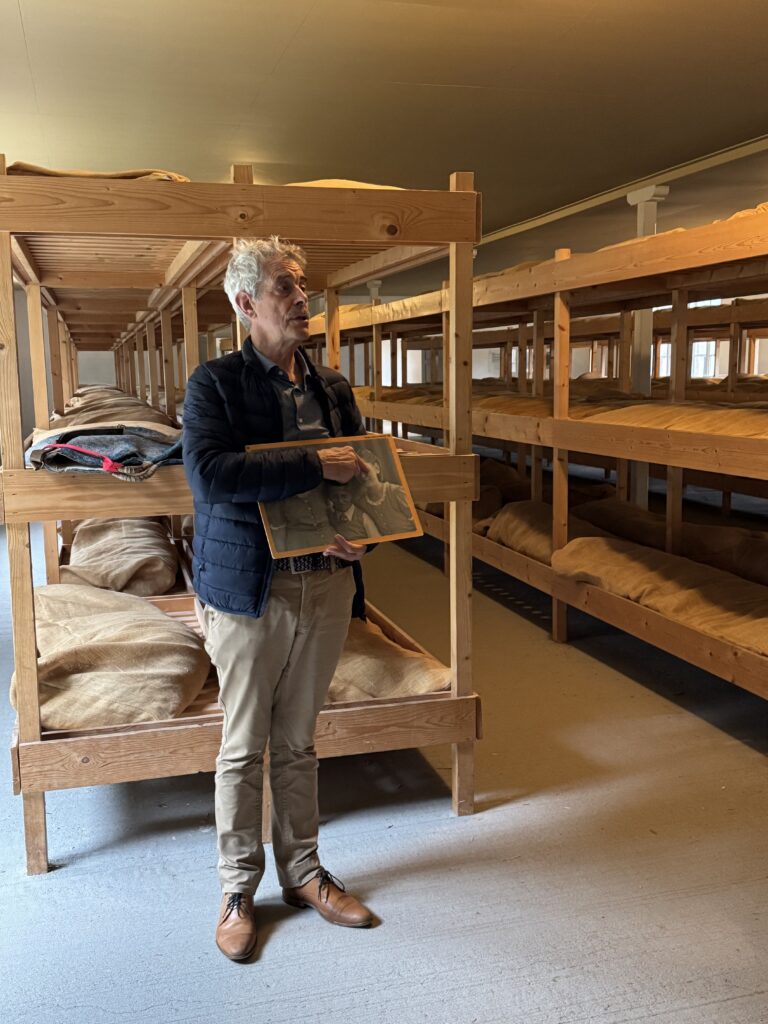
The first exchange, held in the Netherlands and Belgium in the second week of September, revolved around the theme of Operation Market Garden, which took place from 17 to 25 September 1944. Participants explored the Liberation Garden Museum’s immersive exhibits, including trench installations, and visited the Commonwealth War Cemeteries in Leopoldsburg, Belgium. The next day, they toured the Nationaal Monument Kamp Vught in the Netherlands from a tour guide and local resident. The site served as the only SS concentration camp outside Nazi Germany during Second World War. The Freedom Museum Groesbeek revealed lesser-known perspectives of the war, offering an exhibition on Indigenous liberators from the US and Canada.  

Over the following days, participants visited the Airborne War Cemetery in Arnhem, where 1,754 British soldiers are buried. Continuing their adventure, they explored the Airborne Museum Oosterbeek, housed in the old Villa Hartenstein, which served as the headquarters of the British 1st Airborne Division during the war. After delving into the Airborne Experience, an immersive display of airborne soldiers’ journeys during Operation Market Garden, participants ended their journey at the final location of the operation, where soldiers were evacuated after the Battle of Arnhem. There, they had the chance to hike on a part of LRE’s Perimeter Route

Northen France and Belgium Liberation

The second exchange in the fourth week of September traced the route of the Allied Forces in Northern France and Belgium. The programme started in La Coupole, a former Nazi bunker and base for launching V2 rockets, which today serves as a historical and scientific museum in Nord-Pas-de-Calais, France. The centre provides visitors with innovative tools, such as Histopads, to discover the site’s history of forced labour, nuclear weapons and war machinery. 

Moving on to Dunkirk, participants explored the Operation Dynamo Museum, gaining insights into soldiers’ and civilians’ experiences during this pivotal evacuation. A guided tour along the beach highlighted the operation’s role in rescuing over 338,000 Allied soldiers from the beaches and harbour of Dunkirk between 26 May and 4 June 1940. The group then visited the Mons Memorial Museum in Belgium, to learn about the city’s strategic importance in past wars. The programme concluded at the House of European History in Brussels, where participants drew inspiration by participatory youth projects reflecting on contemporary European identity.  

Resistance and diverse war experiences in Italy

The last youth exchange, themed ‘Resistance and diverse war experiences in Italy’, took place in the last week of September and focused on stories and places of the Italian campaign, conducted by the Allies from 1943 until the liberation of Northern Italy in 1945. Participants from ten different European countries met at the EcoMuseo Office in Rome, to learn about the city’s wartime history, followed by a visit to the Historical Museum of Liberation. The next day, they visited the Ardeatine Caves Mausoleum, a memorial commemorating the massacre on 23 and 24 March 1944 and had the chance to hear a moving testimony from a victim’s daughter. The stay in Rome concluded with a guided tour of key sites linked to the Fascist regime and the Second World War.  

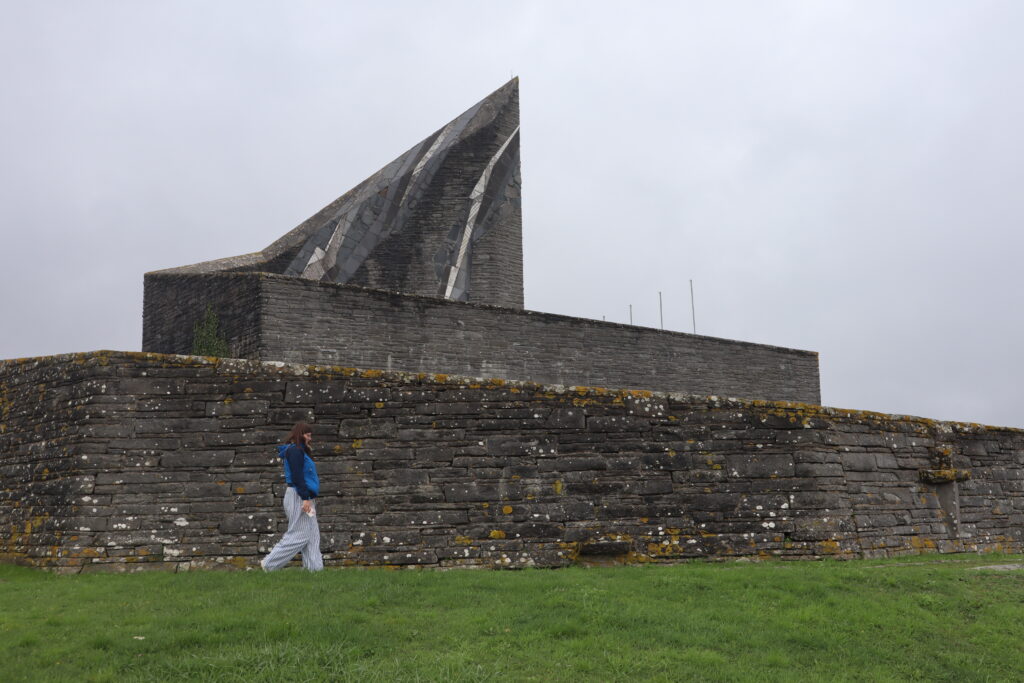
Next, participants travelled to the German cemetery of Futa Pass in Firenzuola, Tuscany. Standing on what used to be the German and Italian defensive ‘Gothic Line’, the cemetery houses the graves of over 30,000 German soldiers who fell in Northern Italy. The group also spent a day at the Monte Sole Historical Park, a site that witnessed the biggest civilian massacre by the Nazis in the country, perpetrated from 29 September to 5 October 1944. The programme ended with the participation to a ‘Floor Vectors of Memory’ installation on this site.

Seven new Liberation Route Europe themed routes in Normandy 

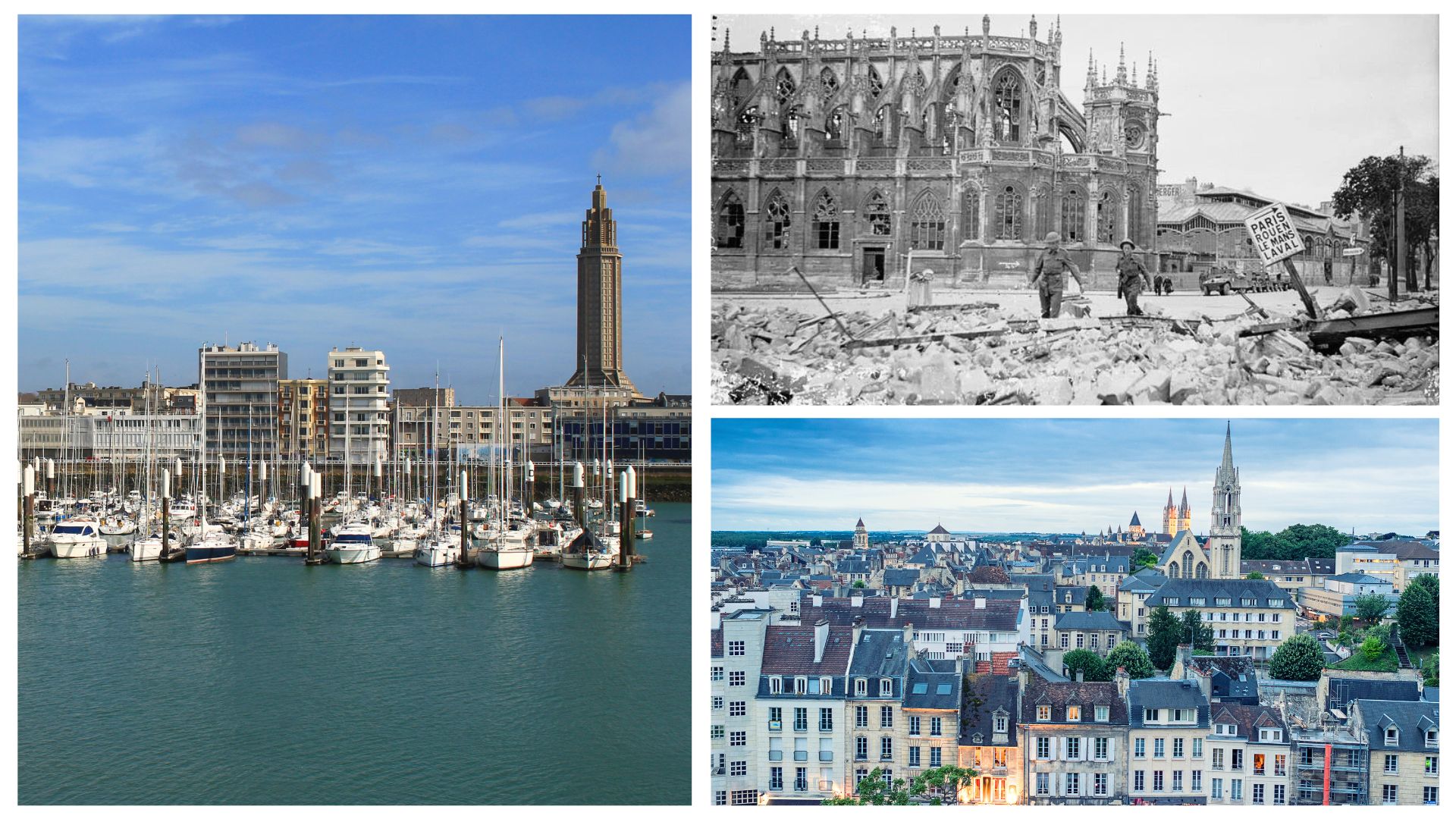
The LRE Foundation, in collaboration with  LRE France, has officially launched seven new themed routes in Normandy. The project is part of the development of the Liberation Route Europe network, and its trails traverse cities and towns in Northwest France. 

The idea behind the project is to shed light on the stories of battles, civilians and cities affected by the end of the Battle of Normandy, as well as less known sites that are often left out from the WWII memorial landscape in France. By coupling military histories with the realities of citizens, the routes illuminate a social and urban perspective to the war beyond the binary of victories and defeats. They also enrich the existing trails along the Landing Beaches with new paths through inland cities and towns such as Le Havre, Caen, Cherbourg, Sainte-Mére-Église, and Saint-Lô.  

This region is one of the most important in terms of preserving the memory of the Second World War, and today marks an important step towards promoting history and making it accessible to as many people as possible.,’ said Isabelle Lebreton, Director of LRE France. ‘Visitors will be able to discover and explore this history in a new way.’ 

One themed route from the same project – Arromanches-les-Bains & Mulberry Harbour – was already launched in 2024, and now joins these newly introduced routes: 

The overall LRE Normandy project will include the creation of new pieces of historical content, ranging from Vectors of Memory to podcasts and communication tools, in order to offer a multimodal way to experience the trails and learn about Normandy’s histories that unfolded in the shadow of key WWII events.

In addition to the key partner LRE France, the trails have been made possible thanks to the support of the  Normandy Region, the French Ministry of Armed Forces and the National Fund for Regional Planning and Development.  

All routes’ information and related stories are freely accessible via the Liberation Route Europe website  and  app, which offer interactive maps, historical insights, and practical tools to help hikers plan their journey and connect with the shared history of Europe’s liberation.