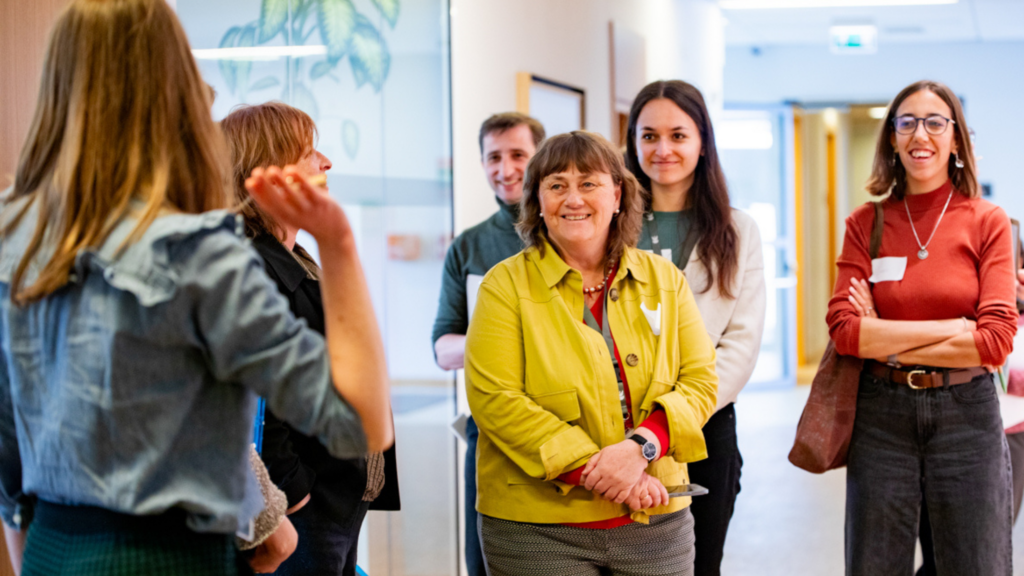


On 23 and 24 April, participants of our Preserving the Past, Securing the Future (PPSF) project met in Gdańsk, Poland, for the programme’s second capacity building workshop, ‘Social Responsibility & Community Engagement in Remembrance Tourism’, hosted at the Museum of the Second World War.
Following on from the momentum of the first workshop in Normandy, this two-day gathering brought together heritage professionals from across Europe to explore how memorial sites can deepen their engagement with communities, and how the principles of social sustainability can be woven into everyday remembrance practice.
The workshop opened on Thursday morning with a warm welcome from the hosting museum, and an introduction to the workshop by LREF and the trainers from Mascontour, project partner and sustainability experts. One of the first highlights of the morning was a dedicated session in which participants shared how they had applied the learnings from Workshop 1 on Environmental Sustainability in Remembrance Practice to their own organisations and discussed any challenges this had brought. Since February, each participant has committed to implementing three short-term, actionable environmental sustainability goals. This session gave everyone the opportunity to reflect on their progress, celebrate successes, and acknowledge the challenges encountered along the way, sharing advice and suggestions amongst the group. To recognise the outstanding efforts made in just a matter of months, the group selected and awarded the top three initiatives from across the cohort — a moment that underscored both the ambition and the practical commitment driving this group.
The core thematic session of the first day focused on People, Memory & Social Responsibility. Led by Mascontour, the session introduced participants to good practices of social responsibility within the cultural heritage and WWII memory sector. Through interactive exercises and open discussion, participants explored how memorial sites can act as anchors of community life, not only preserving the past but actively contributing to the social fabric of the present. The conversation included staff and volunteer engagement, inclusive access, and the responsibilities that heritage organisations carry as stewards of difficult and deeply personal histories.
After lunch, the group enjoyed a presentation by Mateusz Jasik, Deputy Director and Magdalena Jaszcza, Chief Specialist in Programs and Cooperation Department at the Museum of the Second World War in Gdańsk about the site’s history, mission and approach, including many great community initiatives, before embarking on a guided study tour of the museum itself, with a learning exercise along the way.
Opened in 2017, the Museum of the Second World War is one of Europe’s most significant and ambitious WWII memorial institutions. Its expansive permanent exhibition takes visitors on a journey through the causes, course and consequences of the war, placing the Polish experience within a broader global context. For PPSF participants, the visit was not just a cultural excursion but also an opportunity to observe, question and discuss how a major institution like this navigates its responsibilities to different communities: local residents and visitors, international visitors, survivors, educators, and future generations alike.
After an evening to reflect on everything learned and visited during the study tour, Friday’s programme brought the participants back together to consider their responses to the learning exercise. Along the study tour, each participant had been given a persona, from someone with limited physical mobility, to a deaf/blind visitor, to a neurodivergent person or young family. Participants had to consider the visitor experience of this persona as they discovered the museum. Friday’s session was about reviewing this – what was good practice, what could be improved and how. Through this practical exercise and guided reflection, participants developed concrete ideas for strengthening the accessibility of our museums and heritage sites to provide a positive experience for all communities.
To conclude a productive, busy few days, participants explore the dockard of Gdańsk, an area under development, with a guided tour led by Mateusz Jasik, to discuss the neighbourhoods important history and it’s planned future. A memorable end to the visit!
“The Gdańsk workshop marks another important milestone in the PPSF Training Programme, and the energy and commitment shown by participants continues to grow,” says Emme Johnson, Project Manager at the LRE Foundation. “The programme’s combination of e-learning, expert-led workshops, peer learning and mentoring is giving heritage professionals the tools and confidence they need to drive meaningful, lasting change within their organisations,” she adds.
The next workshop will take place on 11–12 June 2026 in Lucca, Italy, hosted by project partner Fondazione Campus and will focus on Economic Sustainability & Strategic Management of Remembrance Tourism Sites. It will continue to build on the foundations laid in Normandy and Gdańsk, as participants carry their growing expertise and networks forward on the journey toward a more sustainable future for WWII cultural heritage across Europe.
PPSF is a Creative Europe programme co-funded by the European Commission.