

We’ve launched the Canadian Trail East Friesland on the Liberation Route Europe, 81 years after liberation 

On Tuesday, April 14, marking the 81st anniversary of Friesland’s liberation in April 1945, we officially opened the Canadian Trail East Friesland, the new and final section of the Liberation Route Europe Canadian Trail in the region. The route follows the path of the Canadian liberators, all the way to the Wadden Sea. 

The inauguration was marked by a powerful symbolic moment: mayors and aldermen from the municipalities of Smallingerland, Opsterland, Ooststellingwerf, Achtkarspelen and Tytsjerksteradiel activated an air-raid siren, echoing the sound that once filled the air during the Second World War.

Along the 75-kilometre route, visitors will encounter 21 war memorials and points of interest, each marked by a Floor Vector of Memory. At every marker, a QR code connects visitors to the specific history of that location, drawing not only on the story of Canadian forces, but on the full breadth of events that unfolded on these very sites during the war. The stories themselves were carefully gathered by volunteers from local historical societies, weaving together the landscape and the memory it holds. 

The project was led by the Smelne’s Erfskip Drachten Foundation in collaboration with the LRE Foundation and the five municipalities, bringing together local knowledge and regional commitment to remembrance. 

In the footsteps of the Canadian liberators 

The Canadian Trail East Friesland follows the advance of Canadian troops as they moved toward the Wadden Sea in April 1945. Their mission was to cut off German forces in Friesland from those in Groningen, gradually isolating them and forcing their surrender. 

Along the way, the route passes through places where key moments unfolded – from the forests south of Oosterwolde, where fighting began in early April, to the canal crossings near Burgum, Kootstertille and Augustinusga. The lock complex near Kollumerpomp marks one of the final locations of intense fighting between April 13 and 16. 

Today, the landscape tells a layered story. Numerous memorials along the route commemorate the many lives lost in the final days before liberation, including civilians, Allied airmen, and victims of persecution and forced labour. 

The Canadian Trail East Fryslân is now available on the Liberation Route Europe app and website, where visitors can explore the route, read all the stories, and plan their own journey through this meaningful landscape. 
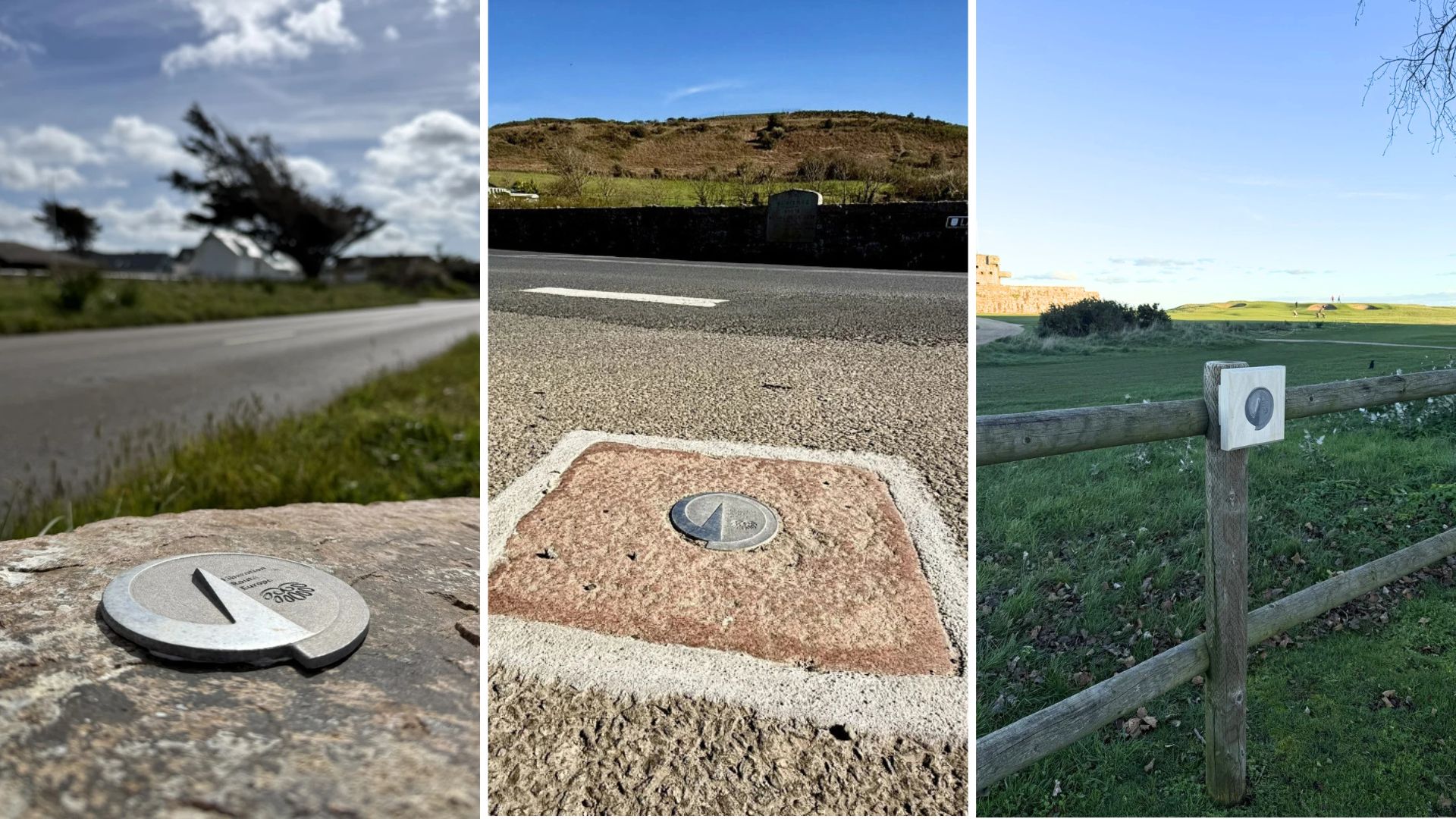
New LRE Trail in Jersey Sheds Light on Forced Labour Under Nazi Occupation 

In partnership with Jersey Heritage, we have just launched the new “Forced Labour Camps in Jersey” themed route on the Channel Island of Jersey. This latest addition to the Liberation Route Europe invites visitors and residents alike to explore a lesser-known chapter of the Second World War: the history of forced and slave labour under Nazi occupation. 

Tracing the history of forced labour on Jersey 

Between the autumn of 1941 and 1944, approximately 6,000 foreign workers were brought to Jersey against their will by the Organisation Todt, responsible for major civil and military construction projects across occupied Europe. These men, and some women, were forced to work under harsh, and even dangerous, brutal conditions on the island. 

They were housed in 13 forced labour camps, often located close to construction sites. Today, these locations are the focus of the new route, marked by the first Liberation Route Europe Vectors of Memory ever installed in the Channel Islands. The trail connects each site, offering visitors insights into the stories of the workers. 

The labourers were assigned physically demanding and dangerous tasks, including building concrete fortifications, excavating tunnel systems, transporting sand and stone, and unloading materials from barges. They came from across Europe and beyond, including Algeria, Belgium, Czechoslovakia, France, Italy, Morocco, the Netherlands, Poland, Russia, Senegal, Spain, Tunisia and Ukraine. Their experiences varied significantly: workers from Western Europe and North Africa were generally conscripted or forced labourers, receiving limited payment in Occupation Reichsmarks and restricted movement outside working hours under curfew, while Soviet workers from Ukraine, Belarus and Russia were treated as slave labourers, with no pay, minimal rations, no freedom of movement, and systematic violence and abuse. The precise status of Polish workers remains, for now, unclear. 

Integrating these sites into the commemorative landscape 

This new route embeds these histories, and the experiences of those involved, into the European WWII commemorative landscape, ensuring they are not forgotten. 

“The launch of this route is a significant step in acknowledging a painful part of Jersey’s wartime history,” said Emme Johnson, Project Manager at the LRE Foundation. “By marking these sites and sharing the stories of those who suffered here, we hope to foster reflection, awareness and a deeper understanding of the human impact of occupation and forced labour. The installation of Vectors of Memory at these sites is also another step to ensure they remain physicallly represented in Jersey’s landscape” 

Plan your visit 

This new trail marks the fifth Liberation Route Europe route on Jersey, further strengthening the island’s role within the wider European memory landscape. 

The route is fully accessible via the Liberation Route Europe website and mobile app, where visitors can explore all locations, read the stories connected to each site, and plan their journey in advance. For those wishing to experience the trail on the ground, GPX files are also available, making it easy to navigate between the former camp sites at their own pace.