


LRE Conference
2027
Pilsen, Czech Republic
9 March 2027
Whose Liberation? Whose Memory?
Hidden, Contested and Difficult WWII Narratives in Europe Today
The LRE Conference 2027 will explore how the memory of the Second World War changes when hidden, contested, and difficult stories are brought into the centre of public debate. Across Europe, WWII is remembered through different experiences of occupation, persecution, resistance, collaboration, displacement, liberation, or repression. These memories do not always sit easily together, and they often raise questions that remain sensitive today.
The programme will address the responsibility of public history institutions, remembrance organisations and educators when dealing with histories that are emotionally charged, politically sensitive or long kept at the margins. It will move from underrepresented narratives, including those linked to gender, sexuality, ethnicity, colonial histories and childhood, to divided memories of 1945, the Red Army and Soviet legacies, and finally to the contemporary struggles over history, borders, war and public responsibility.
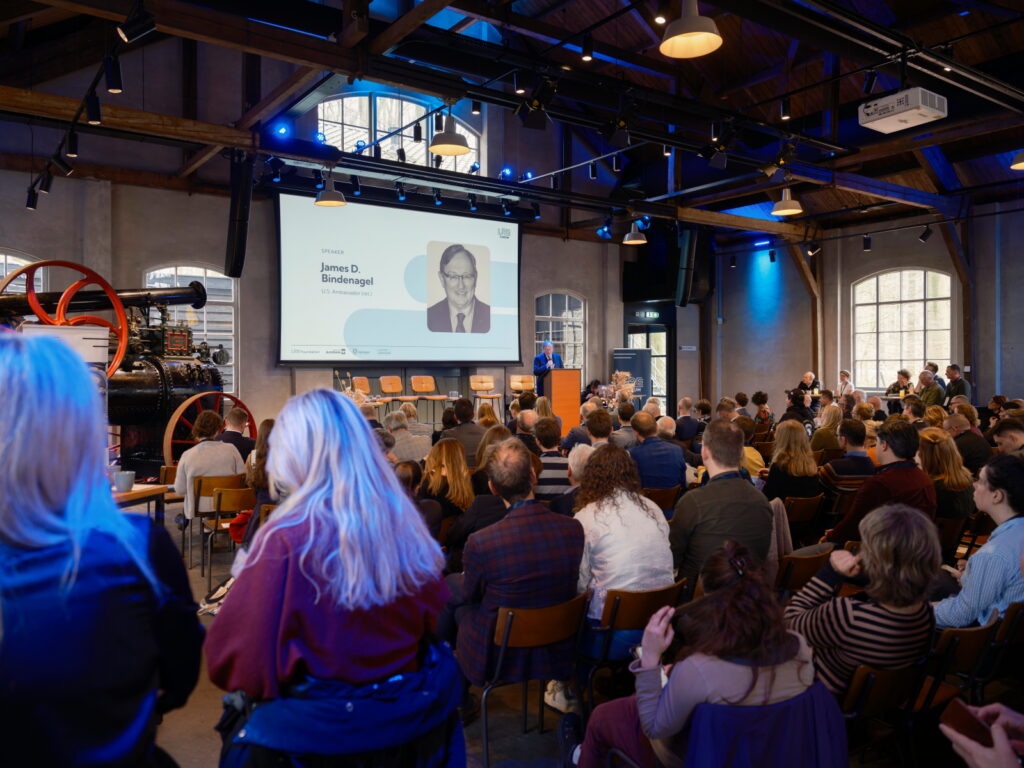
Join us on
March 9
Programme
9 March 2026 – 14:00 / 17:30
Delivered by Caro Howell, Director-General of Imperial War Museums, this opening keynote sets the tone for the afternoon by asking how societies decide which stories of war are remembered, repeated or left aside.
Starting from the question “Who gets remembered?”, it will reflect on the responsibilities of public history institutions, remembrance organisations and cultural actors when they deal with WWII narratives that are incomplete, emotional or politically charged. The keynote will consider how perspectives long kept at the margins can be brought into public memory without turning them into symbolic additions, and how difficult stories can be told without flattening their complexity.
It will also address public trust: how institutions can challenge familiar narratives while remaining accessible, credible, and clear. As an opening reflection, the keynote will connect the conference’s two main concerns: underrepresented wartime experiences and divided memories of liberation, occupation, responsibility and sacrifice.
This panel explores how stories long marginalised, silenced or treated as secondary can change the way WWII is interpreted and transmitted. It will look at experiences often absent from traditional narratives of war, including those linked to Roma and Sinti communities, LGBTIQ people, colonial societies and troops, women, children, forced labourers and displaced persons.
The discussion will ask what happens when these histories are understood as essential to the history of the war itself. Bringing them into public memory can challenge familiar ideas of victimhood, resistance, military service, liberation, survival, and postwar recognition. The panel will also consider how institutions can move beyond symbolic inclusion and integrate these perspectives meaningfully into exhibitions, education, routes and commemorative practices across Europe.
Participants :
Helmut Metzner, Managing Director, Magnus Hirschfeld Federal Foundation (Germany)
Prof. Věra Sokolová, Charles University Prague (Czech Republic)
Mirjam Karoly, Vienna Wiesenthal Institute for Holocaust Studies (Austria)
Prof. Nina Wardleworth, Leeds University (United Kingdom)
A 30 minutes break to grab a cup of coffee or tea
This panel explores how the memory of the Red Army and 1945 can be approached when the same historical moment carries profoundly different meanings across Europe.
The defeat of Nazi Germany was a turning point in the liberation of the continent, and the scale of sacrifice among Soviet soldiers and civilians was immense. Yet for many societies, the end of Nazi occupation did not lead to lasting freedom, but to decades of domination, repression and limited sovereignty. These memories are further complicated by the fact that the Red Army itself was not a single national story, but included people from many parts of the Soviet Union whose experiences have often been absorbed into a simplified Russian narrative.
Since Russia’s full-scale invasion of Ukraine, these tensions have become even more charged. The panel will ask how remembrance can recognise sacrifice and liberation while also addressing occupation, political mythology and contested memories.
Participants :
Jörg Morré, Director, Berlin Karlhorst Museum (Germany)
Roubínek Jan, Director, Terezin Memorial (Czech Republic)
Dmytro Hainetdinov, Deputy Director, National Museum of the History of Ukraine in the Second World War (Ukraine)
In this closing one-to-one interview, Maria Smorževskihh-Smirnova, Director of Narva Museum, will bring the themes of the afternoon into a more personal and contemporary perspective.
The conversation will explore what it means to work with history when memory is no longer only a matter of interpretation, but becomes a reason of pressure, intimidation, resistance and civic responsibility. Drawing on her experience in Narva, on Estonia’s border with Russia, the discussion will focus on the challenges faced by cultural and public history institutions operating in border contexts, where competing memories and political tensions are present in everyday life.
It will ask how institutions can respond when history is used as a tool of propaganda, how they can serve local communities while resisting external pressure, and what courage means in the field of remembrance today.
Venue &
Directions
Municipal Commons (Měšťanská beseda)
Kopeckého sady 59/13, 301 00 Plzeň 3, Czechia
LRE Forum Co-Organisers
Institutional partners

Funded by the European Union. Views and opinions expressed are however those of the author(s) only and do not necessarily reflect those of the European Union or European Education and Culture Executive Agency (EACEA). Neither the European Union nor the granting authority can be held responsible for them.

