


LRE Conference
2026
Open Air Museum in Arnhem, Netherlands - 10 March 2026
“Beyond the 80th Anniversary: The Future of WWII Remembrance”
Eighty years after World War II, the last generation of witnesses is passing, leaving us to find new ways to preserve and share their stories. As global challenges reshape our world, so too must our approach to remembrance.
This one-day conference brings together experts and innovators to explore how we can keep the lessons of WWII alive for future generations. We’ll examine the role of digital media, international research, and inclusive commemoration in making historical memory relevant today.
Further information about the Conference’s programme including the speakers will be disclosed in the upcoming weeks.
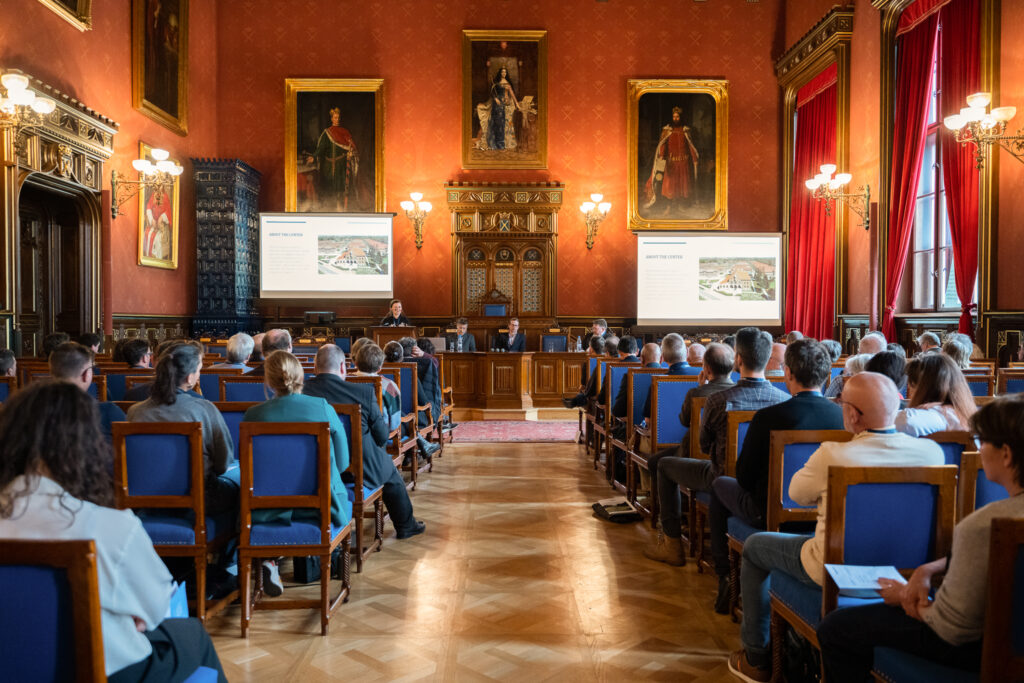
Join us on
March 10
Programme
10 March 2026
Pre-registration is mandatory. On the day of the event, participants will check in at the desk to receive their badge.
Eighty years after the end of the Second World War, the transmission of its history and memory faces new and urgent challenges. As eyewitnesses disappear, remembrance work unfolds in a context marked by rising antisemitism, historical distortion, political instrumentalisation of the past, and the erosion of democratic values. This plenary session opens the conference with a reflection on how WWII memory can be safeguarded in today’s changing world. European voices from culture, research, policy, and civil society will explore the long-term responsibilities of remembrance institutions and the role of historical truth in shaping resilient and inclusive societies.
Keynote speech:
James D. Bindenagel, U.S. Ambassador (ret.)
Panel discussion:
Jurmet Huitema-de Waal, Anne Frank House Education expert and International Holocaust Remembrance Alliance (IHRA) delegate
Rafal Rogulski, Director of the European Network Remembrance and Solidarity (ENRS)
Marieke van Schijndel, Director of the vfonds (National Fund for Peace, Freedom and Veteran Care), the Netherlands
James D. Bindenagel, U.S. Ambassador (ret.)
Moderator: Blandine Smilansky, Head of the Communications and Partnerships Department, House of European History, Brussels
Participants will be given the chance to tailor their programme by selecting one of these roundtables.
Roundtable A: Remembrance Tourism in the Age of Climate Change
Remembrance tourism plays a crucial role in connecting people with the history of the Second World War, yet it also faces growing environmental and sustainability challenges. Travel-related emissions, the preservation of vulnerable sites, and changing visitor expectations require the sector to rethink its practices. This roundtable will examine how remembrance tourism can adapt to the realities of climate change while remaining meaningful and accessible. Speakers will discuss sustainable travel models, environmentally responsible site management, and how memory tourism can actively contribute to broader ecological awareness and responsibility.
Speakers:
Rebecca Armstrong, Head of Impact, the Travel Foundation
Ben de Vries, Historian & Programme Manager of Military Heritage, Cultural Heritage Agency, the Netherlands
Ave Paulus, ICOMOS Climate Action Working Group/President ICOMOS Estonia
Simon Bendry, Director of Education, Engagement and Volunteering, Commonwealth War Graves Commission
Moderator: Emerald Johnson, Project manager, LRE Foundation
Roundtable B: Engaging New Generations – Innovation in Education & Digital Memory
Reaching younger generations has become one of the central challenges of WWII remembrance. Digital technologies, new pedagogical approaches, and participatory formats offer powerful opportunities—but also raise questions about ethics, depth, and historical accuracy. This roundtable focuses on how education and digital innovation can support the transmission of WWII history in a post-witness era. Participants will explore how to adapt narratives, develop new tools, and engage young audiences in ways that are both meaningful and historically grounded.
Speakers:
Victoria Grace Richardson-Walden, Professor of Digital Memory, Heritage and Culture at University of Sussex and Director Landecker Digital Memory Lab, United Kingdom
Sandra Camarda, Assistant Professor in Public History, Luxembourg Centre for Contemporary and Digital History (C2DH), Luxembourg
Marlene Wöckinger, Historian and Educator, Mauthausen concentration camp memorial, Austria
Joanna Wojdon, Professor at University of Wrocław, Poland
Moderator: Joanna Roman, Project manager, LRE Foundation
A 30 minutes break to grab a cup of coffee or tea
Participants will be given the chance to tailor their programme by selecting one of these roundtables.
Roundtable C: International Research & Multi-Perspective Narratives
WWII history is increasingly understood through transnational, multi-perspective lenses that go beyond national narratives. Research, archives, and public history play a key role in uncovering overlooked experiences and connecting individual stories to broader European histories. This roundtable brings together scholars and practitioners to discuss how international research can inform more inclusive and complex narratives of the war. Topics include the integration of underrepresented perspectives, the role of archives and oral history in a post-witness context, and the translation of academic research into public-facing memory practices.
Speakers:
Hinke Piersma, Director of Research and Deputy Director, Institute for War, Holocaust, and Genocide Studies (NIOD), the Netherlands
Peter Johnston Imperial War Museums, Director for Narrative and Content, United Kingdom
Jana Wohlmuth Markupová, Assistant Professor, Charles University, Czech Republic
Mathilde Roza, Associate Professor North American Literature and North American Studies, Radboud University Nijmegen, The Netherlands
Moderator: Ben Mayne, Historian, and Director UK, LRE Foundation
Roundtable D: Reimagining Commemoration: Inclusive & Innovative Ceremonies
Traditional forms of commemoration are evolving as societies change and the generation of direct witnesses disappears. Institutions across Europe are experimenting with new formats that seek to remain respectful while becoming more inclusive, participatory, and relevant for contemporary audiences. This roundtable explores how commemorative practices can be reimagined for the future. Discussions will address the balance between tradition and innovation, the involvement of younger generations, the use of artistic and digital elements, and the responsibility of institutions to ensure authenticity, inclusivity, and long-term impact.
Speakers:
Marta Berecka, Coordinator Commemorative Events, Auschwitz-Birkenau State Museum, Poland
Laurent Bellini, Head of Protocol, City of Paris, France
Nienke Majoor, Head of the Department of Remembrance and Celebration, Comité 4 and 5 May, the Netherlands
Dominik Tomenendal, Head of Department for Remembrance Culture and Networking, Volksbund Deutsche Kriegsgräberfürsorge (War Graves Commission), Germany
Moderator: Joël Stoppels, Program manager, LRE Foundation
Discover the Speakers
Venue &
Directions
Open Air Museum
Hoeferlaan 4, 6816 SG Arnhem, Netherlands
LRE Forum Co-Organisers


Institutional partners


The LRE Foundation has been supported by the National Fund for Peace, Freedom and Veteran Care (vfonds) in the Netherlands since 2012. The vfonds is a strategic partner of the Foundation since, for many projects and initiatives.
The LRE Forum 2026 will include the display of the art exhibition developed within the project ‘Art of Remembrance’ funded by European Union’s Creative Europe Programme.

