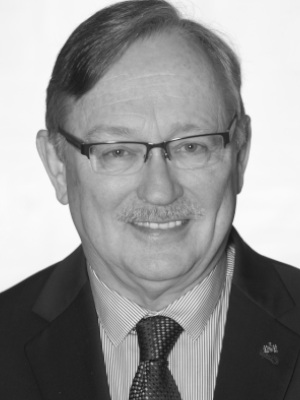
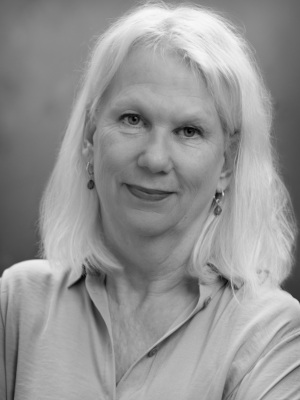
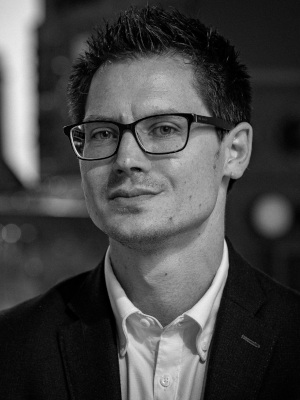
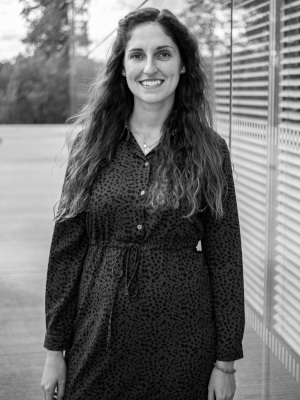
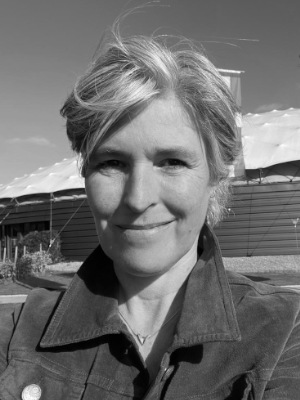
James Bindenagel is a former U.S. Ambassador and Senior Advisor at the Alliance Critical Materials Fund (ACM) in Berlin. After serving as a U.S. Army officer in Würzburg, he spent 30 years in the American Foreign Service. He served six assignments related to German affairs across three Germanys, including roles as Deputy Chief of Mission in East Germany (1989-1990) and as DCM and Charge d’Affaires in United Germany (1994-1997).
President Clinton appointed him Ambassador for Holocaust Issues, and he led negotiations on the Washington Principles on Nazi-confiscated Art and the Kimberley Process Certification Scheme, which banned trade in conflict diamonds. In 2014, the University of Bonn appointed him the Henry Kissinger Professor for Security Studies, with a focus on strategic foresight. He also serves as a Board Member of the German-American Chamber of Commerce, Midwest (AHK), in Chicago. He earned a bachelor’s degree in political science and a Master of Public Administration from the University of Illinois in 1971.
Among his publications is his 2020 book, “Germany From Peace to Power? Can Germany lead in Europe without dominating?” He is listed in Who’s Who in the United States and Who’s Who in the World.
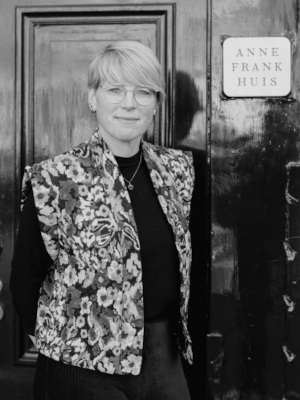
Jurmet Huitema-de Waal
Jurmet Huitema-de Waal is an international project leader and educator at the Anne Frank House in Amsterdam. As a former teacher and educator, she is responsible for the international educational outreach activities, such as the Anne Frank traveling exhibitions, developing educational materials, and training of trainers.
In over 35 countries worldwide, the Anne Frank House is involved in telling the life story of Anne Frank. Through peer-to-peer education, the aim is to actively engage young people in learning about the Holocaust and to encourage them to reflect on what they can do in their own communities to combat antisemitism, racism, and all forms of discrimination.
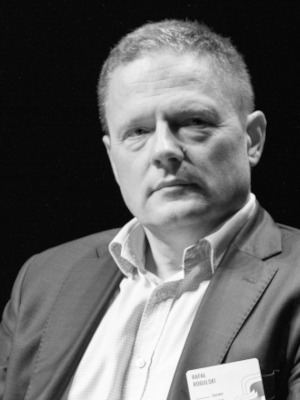
Rafal Rogulski
Rafał Rogulski studied cultural studies and political science at the Universities of Wrocław and Marburg. He served as an assistant and later as an advisor to Professor Władysław Bartoszewski, first at the Polish Robert Schuman Foundation and the Ministry of Foreign Affairs (1998–2001), and later at the Chancellery of the Prime Minister of Poland (2008–2012). From 2001 to 2005, he was Secretary of the Culture Department at the Polish Embassy in Berlin. In the late 1990s, he worked as a journalist for the daily Życie (Life) and the bimonthly journal Europa.
His areas of expertise include international cultural policy, the institutionalisation of history and memory, Polish–German relations, and the history of the Polish People’s Republic and the German Democratic Republic.
In 2010, Ministers Tomasz Merta and Andrzej Przewoźnik entrusted him with the creation and management of the ENRS Secretariat, which in 2015 was transformed into the Institute of the European Network Remembrance and Solidarity.
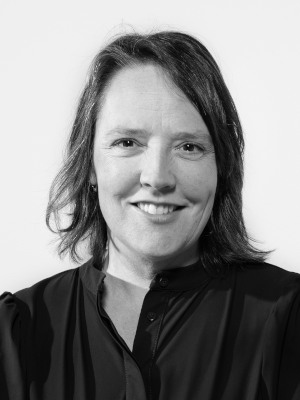
Marieke van Schijndel
Marieke van Schijndel studied Media Studies and Business Administration (MBA). She has held various positions, including policy officer at the Ministry of Education, Culture and Science, deputy director of the Mondriaan Fund (formerly known as the Mondriaan Foundation for visual arts, design, and heritage), and director of Museum Catharijneconvent. Marieke van Schijndel is currently the Managing Director of Vfonds, which supports over one thousand projects annually in the Netherlands.
These projects focus on increasing knowledge about war and conflict, promoting the value of democratic rule of law, and teaching people skills to actively contribute to society. Historically, Vfonds maintains strong ties with the Dutch veterans community.
Rebecca Armstrong
Rebecca is Head of Impact at the Travel Foundation, a global NGO that helps maximise the positive contribution of tourism to people and places, and supports the tourism sector to plan and deliver credible climate action, including pathways to a more equitable, net zero future.
The Travel Foundation’s work spans research and advocacy, capacity building for the tourism industry, and accelerating leadership and innovation through collaborative partnerships. Over the past 20 years, the organisation has partnered with destinations, policy-makers and tourism businesses in more than 200 locations worldwide, supporting place-based strategies and practical planning approaches that strengthen climate resilience and align tourism with community priorities.
Rebecca has a Masters in Responsible Tourism Management, which she took in 2008 as a career change from law. Before joining the Travel Foundation in 2021, she was an independent consultant. She works with destinations and private sector partners on how different tourism models can deliver both climate and community benefits through place-based strategies and practical planning approaches, including climate action planning, product and itinerary development, infrastructure planning, and creating enabling environments through policy, partnerships and destination management.
Ben de Vries
Ben de Vries is a historian and Programme Manager for Military Heritage at the Cultural Heritage Agency of the Netherlands. He works at the intersection of heritage policy, military history, and international cooperation, with a strong focus on sustainable management of heritage sites. His expertise includes post-war heritage, contested heritage, and the integration of heritage protection with spatial planning and tourism.
He studied History at the University of Utrecht and afterwards International Relations at the postgraduate Clingendael Institute in The Hague.
After a career as product manager in outbound tourism in Asia and South America, he worked as Head of Communications in several museums. Nowadays, he is working as an International Coordinator and Program Manager Military Heritage at the Dutch Cultural Heritage Agency, part of the Ministry for Culture. De Vries is specialized in the history and heritage of the 20th c in Europe and Asia (especially Indonesia). Currently he is leading a long-term research and listing program on Cold War heritage sites in the Netherlands.
Ave Paulus
Ave Paulus is Focal Point of ICOMOS Climate Action Working Group and president of ICOMOS Estonia. She is an expert member of the UNESCO panel of experts on Climate Change and World Heritage.
She is among the experts of the Intergovernmental Panel on Climate Change (IPCC) Seventh Assessment Report (AR7). She has coordinated collaboration among heritage communities, states, and universities in more than 30 development and research projects focused on heritage conservation and management.
Among them have been several initiatives related to military heritage, from inventories to international cooperation projects, with the specific focus on military heritage of Lahemaa and Alutaguse National Parks, Estonia.
Her doctoral thesis (Tartu University) deals with community-based coastal heritage management and cultural rights in the face of climate change. Paulus has presented her research and practice results at national and international scientific events and publications.
Simon Bendry
Simon Bendry is Director of Education, Engagement and Volunteering at the Commonwealth War Graves Commission, overseeing global programmes that connect the public with war graves and commemorative landscapes.
With a background in history education and large-scale battlefield and remembrance programmes, he brings extensive experience in managing international visitor engagement while safeguarding sites of memory across diverse environmental contexts.
Victoria Grace Richardson-Walden
Prof. Victoria Grace Richardson-Walden is Full Professor of Digital Heritage, Memory and Culture, and Director of the Landecker Digital Memory Lab at the University of Sussex. She is author of Cinematic Intermedialities and Contemporary Holocaust Memory (2019), editor of The Memorial Museum in the Digital Age (2022), and Digital Holocaust Memory, Education and Research (2021), and Editor-in-Chief of Digital Memory Dialogues, an open access publishing space designed to produce dialogue between disciplines, sectors and industries focused on producing digital Holocaust memory.
She has also produced policy briefings and a working paper for the International Holocaust Remembrance Alliance and the United Nations. She is currently Co-Chair of the UK’s Media Education Association and President Elect of the British and Irish Association of Holocaust Studies.
Sandra Camarda
Sandra Camarda is an Assistant Professor in Transmedia Storytelling and Head of the Public History and Outreach Research Unit at the Luxembourg Centre for Contemporary and Digital History (C²DH), University of Luxembourg. Her research explores the intersections of public history, cultural heritage, and interactive media, with a particular focus on serious games, curatorial ethics, and digital memory.
She has led projects that investigate the role of video games in engaging with difficult histories, has organised public exhibitions and curated digital experiences.
Marlene Wöckinger
Marlene Wöckinger studied History at the University of Salzburg. Since 2016 they have been working at Mauthausen Memorial (Austria) as a tour guide and in 2022 they became the presenter on the Memorial’s TikTok account.
In addition to that, Marlene has worked as a historian on Holocaust education-projects with erinnern.at, EuroClio and TikTok Germany. Marlene is head of the commemorative committee “Papa Gruber Kreis” (St. Georgen/Gusen, Austria).
Joanna Wojdon
Joanna Wojdon is a member of the LRE Historical Advisory Board. She is a Professor of history at the University of Wrocław in Poland, President of the International Society for History Didactics and member of the Steering Committee of the International Federation for Public History.
She has published in these areas but also on the communist propaganda in school textbooks and on the Polish-American history. Her new research project, launched in 2026, deals with diasporic public history and combines various areas of her research interests.
Hinke Piersma
Hinke Piersma is Director of Research and Deputy Director at the NIOD Institute for War, Holocaust, and Genocide Studies. She studied history at the University of Amsterdam and obtained her PhD in 2005 with a thesis entitled De Drie van Breda. Duitse oorlogsmisdadigers in Nederlandse gevangenschap 1945-1989 (The Three of Breda: German war criminals in Dutch captivity, 1945-1989).
She has been affiliated with NIOD since 2003, where she leads projects arising from social issues as a senior researcher, with a particular focus on the disenfranchisement and restoration of rights of Jewish victims of persecution. Recently she published a biography Vergeet de trieste dagen (Forget the Sad Days) about the Jewish lawyer David Simons.
In 2025, Piersma gave her inaugural lecture as professor of History of War, Conflict, and Memory at the University of Amsterdam under title Under the spell of the story. On the importance of what we don’t know when writing history. Her current research program is about Zionism and antizionism the first years after the war.
Peter Johnston
Dr Peter Johnston is a military historian and curator. He is currently the Director for Narrative and Content at Imperial War Museums, where he oversees the curatorial and research activities of IWM staff. Previously, he has been Head of Collections and Research at the Royal Air Force Museum and Head of Collections Research and Academic Access at the National Army Museum in London.
Dr Johnston studied History and Modern History for his Undergraduate and Master’s degrees at the University of Durham, and completed his PhD at the University of Kent in 2014. He has acted as an expert and accompanying academic on battlefield tours from Flanders to the Falklands, as well as regularly appearing across media channels providing expert commentary and insight on historic events and military pageantry.
He has previously published on military history, propaganda, and museum collections, and his latest book is ‘VE Day to D-Day: Month by Month, June 1944 – May 1945’
Jana Wohlmuth Markupová
Jana Wohlmuth Markupová, Ph.D., is an Assistant Professor at the Faculty of Humanities, Charles University, Prague, Czechia. Her professional interests include a biographical approach to contemporary history, microhistory, and oral history research. She is the author of the monographs Ivan M. Havel: From Puzuk to Sakateka (1938–1989) and Hugo Vavrečka’s War. Microhistory From the Threshold of Contemporary History (1945–1952).
She has also collaborated on several research projects with the Institute for Contemporary History of the Czech Academy of Sciences. Currently, she is the chair of the Czech Oral History Association.
Mathilde Roza
Dr. Mathilde Roza is Associate Professor of North American Studies at Radboud University Nijmegen. She specializes in modern and contemporary North American literature, and in Settler Colonial and Indigenous studies.
Recently, she has curated two popular exhibitions on the role of North American Indigenous soldiers in the liberation of Europe, and their connection to the Netherlands in particular: “Albert & Theo: A Special Friendship” (2022-2023) and “Indigenous Liberators: Native American, First Nations and Métis Soldiers and the liberation of the Netherlands” (2025-2026).
With these and other projects she is committed to bring greater visibility and recognition to the thousands of soldiers of Indigenous descent who have not yet become part of Western cultures of commemoration.
Marta Berecka
Marta Berecka is a historian and a curator with many years of experience in teaching Holocaust education at memorial sites. She also completed postgraduate studies Culture Management at the Jagiellonian University. Since 2007 member of the staff of Auschwitz-Birkenau State Museum.
Currently, she is the head of Commemorative Events and coordinates the organization of the annual anniversaries of the liberation of Auschwitz.
Prior to that, as the head of Educational Projects, she was responsible for creating and implementing numerous international projects for participants of all ages and professions, e.g., students, teachers, diplomats or the representatives of army, police and prison service. She is the author and co-author of educational programmes and tools for youth.
Laurent Bellini
Laurent Bellini learned the fundamentals of his profession primarily in the field and his experience -enriched by research, reading, and inspiring encounters with veterans, elected officials, senior civil servants, and numerous French and international figures- has made him a specialist in republican protocol and high-level public relations today.
In 2014, Laurent BELLINI joined the Paris City Hall as Chief of Staff to the Deputy Mayor of Paris, responsible for memory, veterans’ affairs, and the army-nation bond. In this role, he revitalized the partnership between the aircraft carrier Charles de Gaulle and the City of Paris, and proposed commemorative cycles and educational initiatives centered on major memorial themes and anniversaries.
Appointed Head of Protocol for the City of Paris in March 2019, Laurent BELLINI oversaw the city’s protocol events while continuing his mission related to memory and the army-nation bond. In this capacity, he organizes—both in substance and form—the annual ceremonies commemorating the Liberation of Paris, as well as tributes to the victims of the 2015 attacks.
Nienke Majoor
In her role as Head of Remembrance and Celebration at the National Committee for 4 and 5 May, Nienke Majoor oversees the organization of the national programmes on Remembrance Day and the celebration on Liberation Day. She translates societal and cultural developments into policy initiatives and is in charge of multidisciplinary projects that serve to strengthen national commemorative practices.
Nienke Majoor is dedicated to building and maintaining strong partnerships across a broad network of organisers of commemoration ceremonies, cultural institutions, and civic organisations, ensuring that remembrance and celebration remain relevant, inclusive, and impactful for diverse communities across the Netherlands.
Dominik Tomenendal
Domink Tomenendal studied Political Science and history at the University of Regensburg and the Ludwig-Maximilians-Universität Munich. During his studies he spent two semesters in Washington, DC.
After his studies he worked at the Bayreuth Festival and wrote a little book about the family of Richard Wagner. He worked 10 years as director of studies at the European Academy of Bavaria in the field of political (or maybe better: civic) education, including seminars, lectures and study trips to the centres of European politics. During that time, he spent a fellowship in Moscow in 2019/20, learning Russian, working with the Goethe Institute and the Hanns-Seidel-Foundation.
He is head of the department for remembrance culture and networking with the Volksbund Deutsche Kriegsgräberfürsorge since 2024.
LRE Forum
Co-Organisers
Institutional partners
The LRE Foundation has been supported by the National Fund for Peace, Freedom and Veteran Care (vfonds) in the Netherlands since 2012. The vfonds is a strategic partner of the Foundation since, for many projects.
The LRE Conference 2024 is part of a series of initiatives organised under the umbrella youth project ” Persecution Through their Eyes” funded by the Citizens, Equality, Rights and Values programme of the European Union.